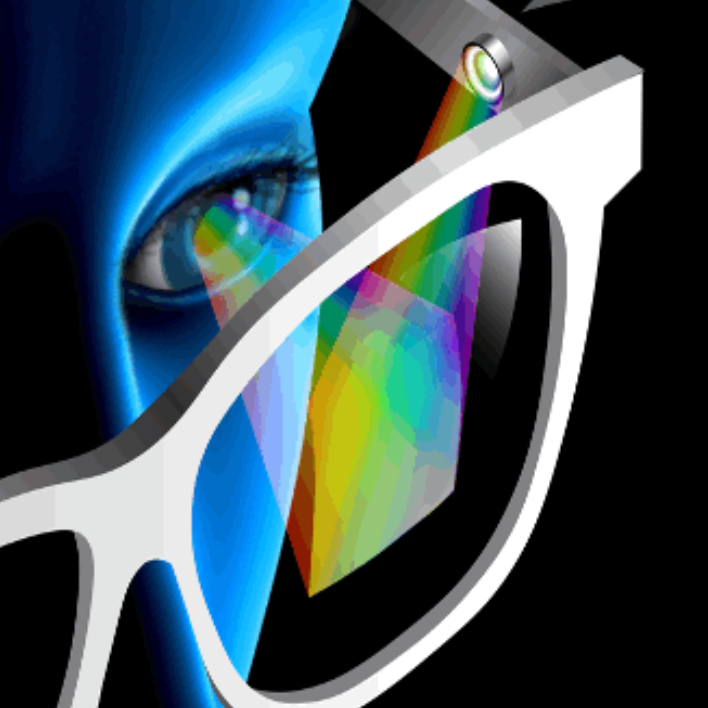

Researchers are a step closer to using an ordinary pair of eyeglasses to view both real and virtual high-definition 3D holographic images, according to a study led by Princeton University researchers.
The optical elements required to create these images are tiny and could potentially fit on a regular pair of glasses—no headset required, says Felix Heide, assistant professor of computer science and senior author on a paper published April 22 in Nature Communications.
Radical optical improvement
Holographic images are currently created by a small chip-like device called a "spatial light modulator." These modulators could only create images that are too small or large but fuzzy.
So the researchers created a new "étendue expander" device to improve image quality. The new device filters the light from the spatial light modulator to expand the field of view while preserving the stability and fidelity of the larger image, with only a minimal drop in quality, according to the researchers.
A pattern etched into frosted glass is the key. Designed using AI and optical techniques, the etched surface scatters light created by the spatial light modulator in a very precise way. This improves the quality of the holographic image and expands the field of view.
Improving virtual and augmented reality displays
The image quality isn’t yet perfect ,and the fabrication process for the optical elements needs to be improved. “A lot of technology has to come together to make this feasible. But this research shows a path forward,” said Heide.
“Holography could make virtual and augmented reality displays easily usable, wearable and ultrathin,” he said "They could transform how we interact with our environments—everything from getting directions while driving to monitoring a patient during surgery."
The research team also includes Meta Research and the Visual Computing Center at King Abdullah University of Science and Technology.
Citation: Tseng, E., Kuo, G., Baek, SH. et al. Neural étendue expander for ultra-wide-angle high-fidelity holographic display. Nat Commun 15, 2907 (2024). https://doi.org/10.1038/s41467-024-46915-3 (open access)

