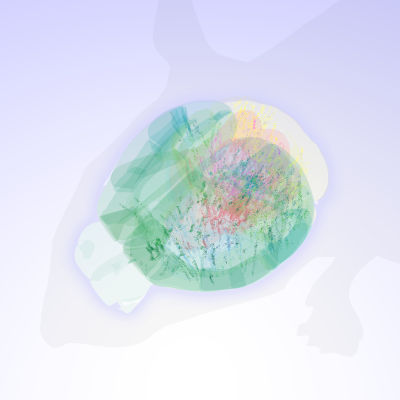

Scientists from around the world have created the first complete map of brain activity in mice while they make decisions. This map, shared in two papers (1, 2) published in Nature, shows how the brain works during decision-making at the level of single cells. Decision-making is the process of choosing between options, like deciding which way to turn. The map covers 279 brain areas, which is about 95% of a mouse’s brain, and includes data from over half a million neurons. This work changes the old idea that the brain works in a simple, step-by-step way, showing instead that many brain areas work together in a coordinated manner.
How the Brain Lights Up During Decisions
The map reveals how brain activity changes during a task. At first, when a mouse sees a light on a screen, the activity is low. Then, as the mouse gathers information to decide, activity grows in the visual areas at the back of the brain. Next, more areas become active as the decision forms, followed by motor areas when the mouse moves. Finally, activity spikes everywhere when the mouse gets a reward, like a treat. Researchers used special tools called Neuropixels probes to record this activity while mice turned a wheel based on where the light appeared. In some cases, the light was faint, so the mice guessed using past experiences. This helped scientists see how expectations - beliefs based on what happened before affect decisions.
The first paper shows that decision-making signals are spread across the brain, not just in one spot. The second paper found that expectations are encoded, or stored, in many brain areas, including those for sensing and moving, like the thalamus, which first processes visual input. This suggests the brain predicts what might happen and guides actions using these widespread signals. These findings could help understand conditions like schizophrenia and autism, where expectation processing might differ. The collaboration used shared tools and methods to ensure accurate results, offering a new way to study the brain’s complex role in behavior.