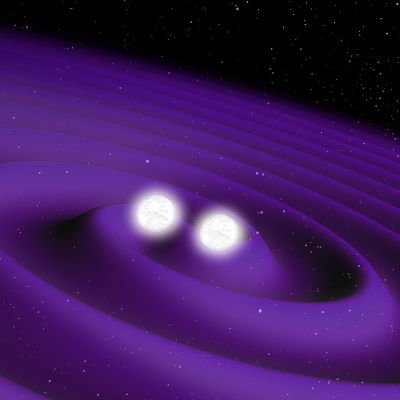

Physicists have made a technology advance for detecting gravitational waves, which are ripples in spacetime caused by huge objects like merging black holes speeding up. This new device, called FROSTI, is a full-scale prototype that manages laser wavefronts, the shape of light waves from lasers, at very high power levels inside LIGO, the Laser Interferometer Gravitational-Wave Observatory. LIGO is a system that uses two long laser setups, each 4 kilometers long, in Washington and Louisiana to spot these tiny ripples, confirming ideas from Einstein's Theory of Relativity about how gravity works.
LIGO first detected gravitational waves in 2015, starting a new way to study the universe, including black holes, the overall structure of space, and extreme forms of matter. Its mirrors are very exact, each 34 centimeters wide, 20 centimeters thick, and weighing 40 kilograms. They must stay perfectly still to catch spacetime changes smaller than one-thousandth the size of a proton. Any shake or outside noise can hide the real signals.
FROSTI, which stands for Front Surface Type Irradiator, fixes distortions from intense laser heat on these mirrors. Lasers in LIGO can reach over 1 megawatt of power, much stronger than today's levels and billions of times more than a common laser pointer. FROSTI uses a thermal projection system to make fine, detailed corrections without adding extra noise that might look like gravitational waves.
The future of FROSTI
This technology is key for future detectors like Cosmic Explorer, which will look deeper into space. By keeping mirrors in perfect shape at high powers, it solves the problem of laser heat ruining delicate quantum states, tiny particle behaviors needed for clear signals. This could let scientists see 10 times farther, spotting millions more mergers of black holes and neutron stars, dense collapsed stars, with better detail.
FROSTI was tested on a real LIGO mirror and is ready to scale up for bigger ones in upgrades like LIGO A#, a test for larger observatories. Physicists at UC Riverside, MIT, and Caltech, have published this research in Optica.