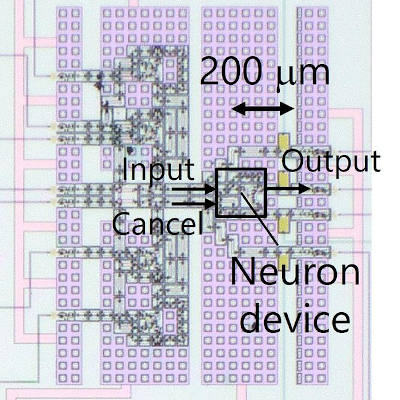

Scientists at Yokohama National University have created a small neuron device for brain-like computing. This device works with special circuits that use superconductors. The device copies how real brain cells activate signals. It is built to run in large networks for artificial intelligence (AI). This research is published in Neuromorphic Computing and Engineering.
Brain-like (neuromorphic) computing uses special hardware to make AI networks run fast while using very little power. These AI networks need to change connections quickly and in small steps to learn hard tasks.
Overcoming key hurdles in ai hardware
Big challenges remain for real-world brain-like AI. Older neuron devices vary in how they work due to tiny flaws made during building. This variation hurts the whole network's performance. The new device fixes this by using digital signals based on magnetic flux quanta. A magnetic flux quantum is the smallest bit of magnetic field in a superconductor. This makes signals exact and the same every time.
The device copies the ReLU activation function. ReLU is a simple rule where output is zero for negative inputs and matches positive inputs. The new circuit uses single flux quantum logic for this. Single flux quantum logic is a superconductor method that handles data at super speeds with almost no power.
What makes this device strong is its resistance to flaws. Even if circuit parts vary by 20 percent, it still works perfectly, the scientists say. Older devices, which used analog signals, failed easily with such changes. Past tries at brain-like circuits used more power and could not copy complex brain actions well. This one runs ultra-fast, uses tiny power, and handles big networks without losing quality.
The scientists the device gives perfect signal flow and stops variation issues. It paves the way for huge superconductor AI networks that learn tasks. In the future, the scientists plan to build a full large network and show it learning. This could boost brain-like computing for high-speed, low-power AI in phones, robots, and more.