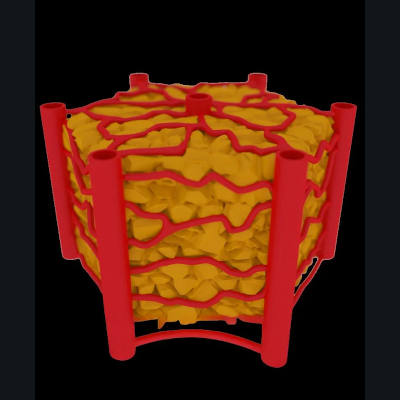

Scientists study new drugs using organs-on-a-chip, also called microphysiological systems. These are tiny devices that mimic human organs. They grow tissue in microfluidic chips, which are small tools controlling fluids. This method helps researchers study drugs accurately. It avoids testing on humans or animals. A big challenge exists, though. Mini-organs need blood vessels to work well. Blood vessels carry blood in the body. Without them, these chips can’t fully copy real organs.
Researchers at TU Wien and Keio University solved this problem. They used ultrashort laser pulses to make tiny blood vessels. These laser pulses are very fast, lasting femtoseconds. The method creates vessels quickly and consistently. Experiments show these vessels act like real ones. The researchers also made liver lobules on a chip. Liver lobules are small parts of the liver.
Improved materials and realistic reactions
The process involves hydrogels, special materials that support living cells. Hydrogels let fluids pass through, like real tissues. Researchers create tiny channels in hydrogels using lasers. Endothelial cells, which line real blood vessels, grow in these channels. This makes the vessels look and act natural. Controlling the shape of these vessels was hard before. Earlier methods made vessels with uneven shapes. This caused problems in experiments. The new laser method fixes this. It creates precise channels, spaced only a hundred micrometers apart.
To keep vessels stable, researchers improved the hydrogel. They used a two-step heating process to make the material stronger. Cells can change their surroundings, which may collapse vessels. The new method prevents this. The vessels stay open and hold their shape. The researchers also tested the vessels. They found that the artificial vessels react like real ones. For example, during inflammation, a body response to harm, the vessels become more permeable.
This technology helps study the liver better. The researchers made a liver model with tiny vessels. This model copies the liver’s natural structure. It ensures nutrients and oxygen reach the tissue. The method is fast and scalable. It can create many channels quickly. This research is published in Biofabrication.