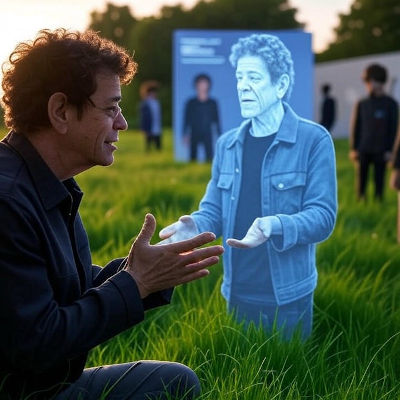

In 2019, a mother who lost her daughter to a rare blood disease used a virtual reality (VR) headset to meet an AI version of her child in a grassy field. This emotional moment, watched by millions on YouTube, showed how technology might change how we connect with those who have passed away. Recent studies from CU Boulder suggest that, with artificial intelligence (AI) agents that work on their own, this technology is already here.
New possibilities with AI ghosts
Jed Brubaker, a professor studying information science, believes people may soon create AI versions of loved ones to interact with after death. His work helped develop Facebook’s Legacy Contact, a feature allowing someone to manage a user’s account after they die. Brubaker’s new research, done with Meredith Ringel Morris from Google DeepMind, explores this growing area called AI afterlives. Examples include a chatbot of musician Lou Reed, made from his writings, and a new Beatles song using John Lennon’s AI voice. Startups like Re;memory and HereAfter now offer services to create digital avatars, which are virtual copies of people, based on videos and audio.
Brubaker sees “generative ghosts” as the next step. These are advanced AI powered by large language models (LLMs), capable of new conversations or tasks like managing estates. While some find this creepy, Brubaker notes that past innovations, like photographs, once felt strange but are now normal.
“You could go interact with this super high-fidelity, interactive memorial, and instead of them just reading you some pre-scripted words, you could have an authentic conversation," says Brubaker in a CU Boulder press release. This research is published in
These AI ghosts could help with grief or preserve history, such as Holocaust survivor stories in museums. However, challenges remain, like deciding how long to use them or preventing unwanted creations. Brubaker hopes his research will guide tech companies and leaders to handle this ethically as the technology grows.