
Scientists at Argonne National Laboratory have introduced a new Artificial Intelligence (AI) framework for supercomputers to quickly find new proteins for use in medicines, catalysts, and other applications.
The new MProt-DPO framework can use different types of information together, like data from experiments, computer simulations, and even stories or descriptions about proteins. This mix of information helps the AI better understand and design proteins.
Proteins are large molecules made from amino acids. Each protein has a specific shape and function, and changing the amino acids can change how the protein works. The AI helps find the right changes to make proteins work better for specific uses, like breaking down plastics or helping in medical treatments.
MProt stands for Multiple Protein, and DPO stands for Direct Preference Optimization. This means the system learns to make better proteins by figuring out which designs are good or bad from the results of experiments and simulations.
There are billions of ways to arrange amino acids in a protein. Testing all these combinations in a lab would take forever, but with AI and supercomputers, scientists can predict which combinations might work best without having to test each one.
DPO means the AI learns from results. If a protein works well, the AI remembers what made it good and tries to make more like it next time. If it doesn't work, it learns from that too.
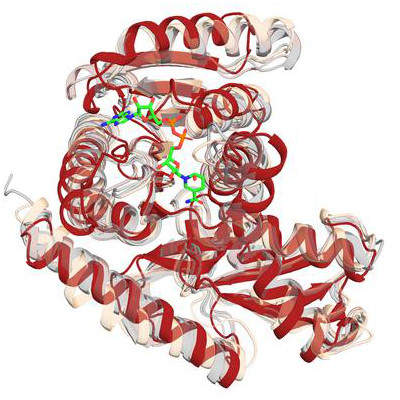
The scientists tested the MProt-DPO framework by redesigning a yeast protein and an enzyme called malate dehydrogenase, which helps cells produce energy. They used data from real experiments and simulations to teach the AI to make better versions of these proteins.
ChatGPT for protein design
Argonne computational scientist Gautham Dharuman will present MProt-DPO at the supercomputing conference SC24.
“If you think about how ChatGPT works, humans provide feedback on whether a response is helpful or not,” says computational biologist Arvind Ramanathan in an Argonne press release. “MProt-DPO works in a similar way, but we replace human feedback with the experimental and simulation data to help the AI model learn which protein designs are most successful.”
The scientists are developing AuroraGPT, a big AI model that could help with many scientific areas, not just protein design.