MIT scientists have developed a way for Artificial Intelligence (AI) to find connections between different scientific topics and suggest research ideas.
AI reproduces the results of human thought processes to a certain degree, but it usually struggles to link complex ideas from unrelated fields.
Generative AI can create new content, like text or music, by learning from existing data. The MIT scientists combined generative AI with graphs that show how things connect or relate to each other.
These graphs are based on category theory, a branch of abstract mathematics that models systems as collections of abstract objects and their relationships.
An open access paper published in Machine Learning: Science and Technology describes how the scientists made AI understand and reason about complex systems. The scientists trained AI systems with information from 1,000 scientific papers about biological materials, creating a map of knowledge.
An MIT press release summarizes some interesting connections found by the AI. An even more interesting one, analyzed in the paper, is found between flowers and nacre-inspired cement.
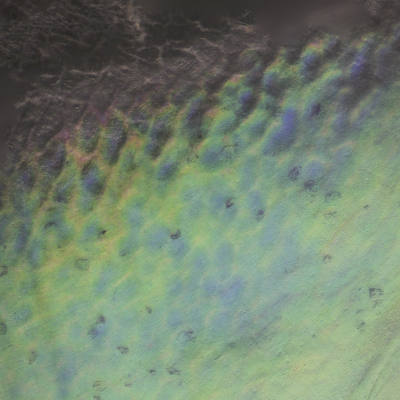
Nacre is an organic–inorganic composite material found in the inner shell of some mollusks. Nacre-inspired cement replicates some interesting properties of nacre in construction materials.
Creative research ideas
The scientists asked different large language models (LLM) to analyze multiple alternative paths between "a flower" and "nacre-inspired cement" in the knowledge graph. Then they asked the LLMs suggest creative research ideas.
The LLMs suggested creative research ideas indeed (see text boxes 1-4), with ChatGPT-4 showing "the most impressive reasoning capability and the most detailed response."
All LLMs suggested to study the behavior of hydrogen and covalent bonds in certain materials. For examole, in chitosan (a natural polymer found in the exoskeleton of crustaceans) or polyethylene glycol dimethacrylate (PEGDMA).
GPT-4 also suggested to study how superhydrophobic surfaces, like those of rose petals, influence mechanical properties of materials.
This work shows that AI can help us think creatively across different fields, potentially leading to new discoveries.