
Researchers at the University of Chicago have created an artificial intelligence (AI) model to find new materials for better batteries. Batteries need electrolytes, which are liquids that carry electric charge between parts. For new battery types, there is not much data yet because studies take weeks or months. Normally, these models need millions of data points to work well, but waiting for that is too slow.
The researchers started with only 58 data points. Their model used active learning, a method where the program picks what to study next to improve itself. It explored a virtual space of one million possible electrolytes. From this, they found four new ones that perform as well as the best current ones.
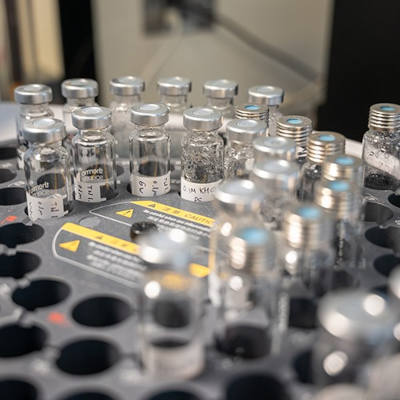
To make sure the suggestions were good, the researchers tested them in real batteries. The model predicted electrolytes, then the scientists built batteries and checked cycle life, which is how many times a battery can charge and discharge before failing. They fed these real results back into the model to refine it.
Verifying and refining the results
Predictions from small data can have errors, like guessing too far from known facts. The model showed uncertainty in its suggestions, so the scientists tested about 10 electrolytes per round, doing seven rounds total. This way, they avoided bad results and focused on the best ones. Without this method, testing all one million would be impossible.
Looking ahead, the plan is to make the model generative, able to create totally new molecules not based on old data. The chemical space is huge, up to 10 followed by 60 zeros. Future models should check multiple things, like safety and cost, not just cycle life. This approach helps break human biases toward familiar materials and speeds up discovery for urgent needs like better energy storage.
The researchers have described the methods and results of this study in a paper published in Nature Communications.