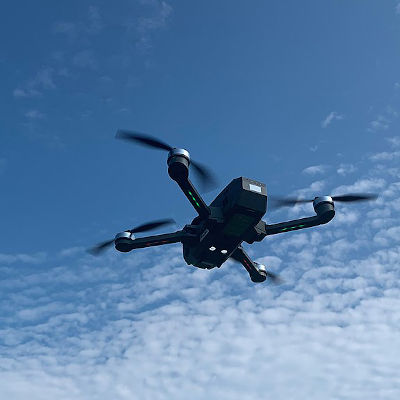

Researchers have created a brain-computer interface (BCI) that lets a 69-year-old man, paralyzed with tetraplegia due to spinal cord injury, control a virtual drone using just his thoughts, Nature News reports.
This BCI works by translating brain activity into actions. In this case, the BCI reads the man's brain signals as he imagines moving his fingers. The BCI connects the man's brain to a computer, allowing him to control things with his thoughts.
The man could control three groups of fingers in his mind, which is more complex than earlier BCIs that mostly moved a single cursor or a whole hand. This new way of using multiple fingers could help paralyzed people do more things, like typing or playing video games. Matthew Willsey, a neurosurgeon at the University of Michigan, says that many activities we enjoy, like playing musical instruments, need precise finger movements. The study focuses on improving control over multiple actions at once.
Allowing paralyzed patients to recover abilities that normally rely on the hands or on speech
This project, described in a paper published in Nature Medicine, started because the man wanted to fly a drone with his mind.
He described controlling the drone like playing a musical instrument, where you make small, precise movements to adjust its path. This shows how BCIs could change the lives of people with paralysis by giving them back control over their environment in new, meaningful ways.
This project was part of the BrainGate2 neural interface clinical trial. The purpose of this trial is to obtain preliminary device safety information and demonstrate the ability of people with tetraplegia to control a computer cursor and other assistive devices with their thoughts. In particular, the study wants to identify the core methods and features for a medical device that could allow people with paralysis, including severe speech impairment, to recover a host of abilities that normally rely on the hands or on speech.