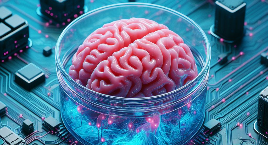

A Breakthrough in Hybrid Technology In an innovative leap, researchers have successfully combined laboratory-grown human brain tissue with conventional electronic circuits to create a hybrid biocomputer. This pioneering system, known as Brainoware, can perform tasks like voice recognition, merging the biological intricacies of the human brain with the computational power of electronic hardware.
Brainoware: A Bridge Between AI and Neuroscience Brainoware uses brain organoids, clusters of human cells mimicking organ structures, derived from stem cells that specialize into neurons. This groundbreaking approach aims to build a connection between the field of artificial intelligence and organoid research. Feng Guo, a bioengineer and co-author of the study, emphasizes the goal of leveraging the biological neural network within these organoids for computational purposes, potentially transforming both AI systems and neuroscience research.
Harnessing the Power of Brain Tissue To operationalize Brainoware, the researchers placed an organoid on a plate embedded with thousands of electrodes. This setup connects the brain tissue to electronic circuits. By converting input information into electric pulses delivered to the organoid, the system captures the tissue's response through sensors and decodes it using machine learning algorithms. In a voice recognition test involving 240 recordings, Brainoware identified speakers with 78% accuracy, showcasing its potential in AI and computational tasks.
Implications and Future Prospects This technology not only paves the way for AI advancements but also offers a new model for studying the human brain and neurological disorders. It could revolutionize how we understand and treat conditions like Alzheimer's disease and replace animal models in brain research. However, significant challenges remain, such as sustaining the organoids and scaling the system for more complex tasks. Future research will focus on enhancing the stability and reliability of brain organoids for integration into current AI computing technologies.
Interesting story? Please click on the ? button below!
SOURCE: ‘Biocomputer’ combines lab-grown brain tissue with electronic hardware (nature.com)