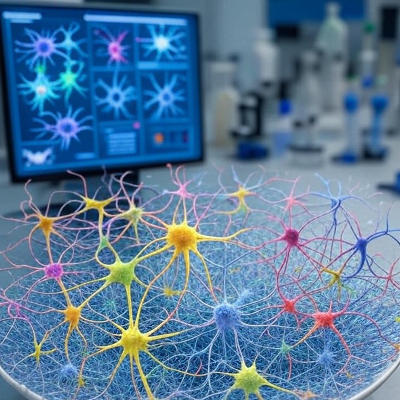

Researchers have shown that brain cells learn faster and form better networks than machine learning systems by comparing a "Synthetic Biological Intelligence" system called DishBrain with top reinforcement learning algorithms.
This study is the first to directly compare biological and artificial learning in this way. The work was done using the CL1, a commercial biological computer from Cortical Labs that combines lab-grown neurons with silicon hardware to create Synthetic Biological Intelligence, a form of AI based on living biology rather than just code. This study is published in Cyborg and Bionic System.
DishBrain uses live neural cultures on high-density multi-electrode arrays, devices that record and stimulate electrical signals from many points, in real-time game setups like Pong. By mapping spiking activity, the electrical pulses neurons use to communicate, into simpler spaces, the study spotted differences between rest and gameplay states. This revealed how networks change dynamically during tasks, showing high sample efficiency, meaning they learn a lot from few examples, in response to stimuli like feedback signals.
To test this broadly, researchers pitted these biological systems against deep reinforcement learning algorithms. In Pong simulations with limited samples matching real-time biology, the simple neural cultures outperformed the AI across performance measures, suggesting greater efficiency when data is scarce like in natural learning.
Pathways to bioengineered intelligence
A second paper published in Cell Biomaterials proposes "bioengineered intelligence" as a new way to build smart devices by engineering neural circuits in lab cultures, distinct from Organoid Intelligence, which grows mini-brain structures. Bioengineered Intelligence aims to create structured information processing for applications in medicine, science, or computing. The framework compares both paths, noting that combining results could speed ethical progress in intelligent systems.
These findings seem to suggest that true intelligence is biological. Neural cultures reorganize quickly in response to stimuli, showing brain-like adaptability far beyond current machine learning.
Reviewers note this advances neuroscience by modeling learning and memory interactively, potentially reshaping computation with efficient, adaptive biological substrates, and praise the rapid development of CL1 as a platform for brain-inspired tasks.