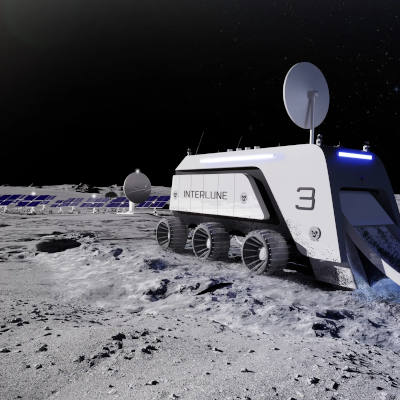

Bluefors, a company that makes cooling systems for quantum technology, has agreed to buy up to ten thousand liters of helium-3 each year from Interlune, starting in 2028 and lasting until 2037. Helium-3 is used in special cooling equipment. Interlune plans to collect this gas from the moon, where it is abundant because the solar wind has deposited it over time without interference from a magnetic field like earth's. Samples from NASA's Apollo moon missions first showed this abundance. On earth, helium-3 is scarce but potentially very valuable for applications including nuclear fusion and quantum computing.
The deal aims to meet the growing demand for helium-3 as quantum computing expands in fields like medicine, finance, chemistry, artificial intelligence, and cybersecurity. Bluefors uses helium-3 in its cryogenic systems that create extremely cold temperatures under 10 millikelvin, which is close to absolute zero. This cold is needed to keep qubits stable.
Securing resources for quantum progress
Interlune's technology for harvesting helium-3 from lunar soil, called regolith, is designed to be small, light, and energy-efficient, making it cheaper to send to the moon and run there. The same methods can also extract helium-3 from gas supplies on earth in the meantime. Bluefors already supplies cooling systems to major companies like Google, IBM, Intel, Amazon, and Microsoft, and has installed over 1,500 dilution refrigerators - special coolers that mix helium isotopes for ultra-low temperatures - and more than 15,000 cryocoolers worldwide. This partnership will help ensure a steady supply of helium-3 as quantum computers scale up to handle over 1,000 qubits, driving faster innovation.
Interlune also plans to gather other moon resources like metals, rare earth elements, and water to build a space economy. Both companies see this as a step toward reliable quantum technology that could lead to new scientific and medical discoveries.
This story is covered by The Washington Post (unpaywalled copy).