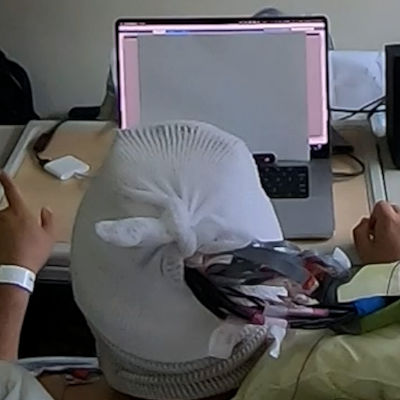

Scientists at Columbia University’s Zuckerman Institute have shown for the first time in humans that a brain-controlled hearing system can help listeners single out one voice in a noisy crowd. The system acts like an extension of the brain’s natural ability to focus on a particular conversation.
The scientists worked with epilepsy patients who already had electrodes placed in their brains for medical reasons. The patients listened to two different conversations played at the same time. Machine-learning algorithms quickly analyzed the brain waves. The system then automatically increased the volume of the conversation the person was paying attention to and lowered the other one.
This approach addresses a major limitation of current hearing aids. Traditional hearing aids amplify all sounds equally, making it hard to follow a single speaker in noisy places. The new technology aims to recreate the so-called cocktail party effect, the brain’s natural ability to focus on one voice among many.
From brain signals to clearer hearing
In tests, the system correctly identified which conversation each listener wanted to hear. It improved speech clarity, reduced listening effort, and was strongly preferred by the participants. Some volunteers described the experience as unbelievable and suggested it could greatly help family members with hearing difficulties.
The findings represent an important step toward future wearable devices that could help the more than 430 million people worldwide with disabling hearing loss. Such devices may one day make social situations easier and reduce listening fatigue. However, researchers note that much more work is needed to make the technology safe, minimally invasive, and practical for everyday use in complex real-world environments.
This research suggests the practical possibility of future wearable systems that could integrate brain sensing with advanced audio processing. The scientists have described the methods and results of this study in a paper published in Nature Neuroscience.