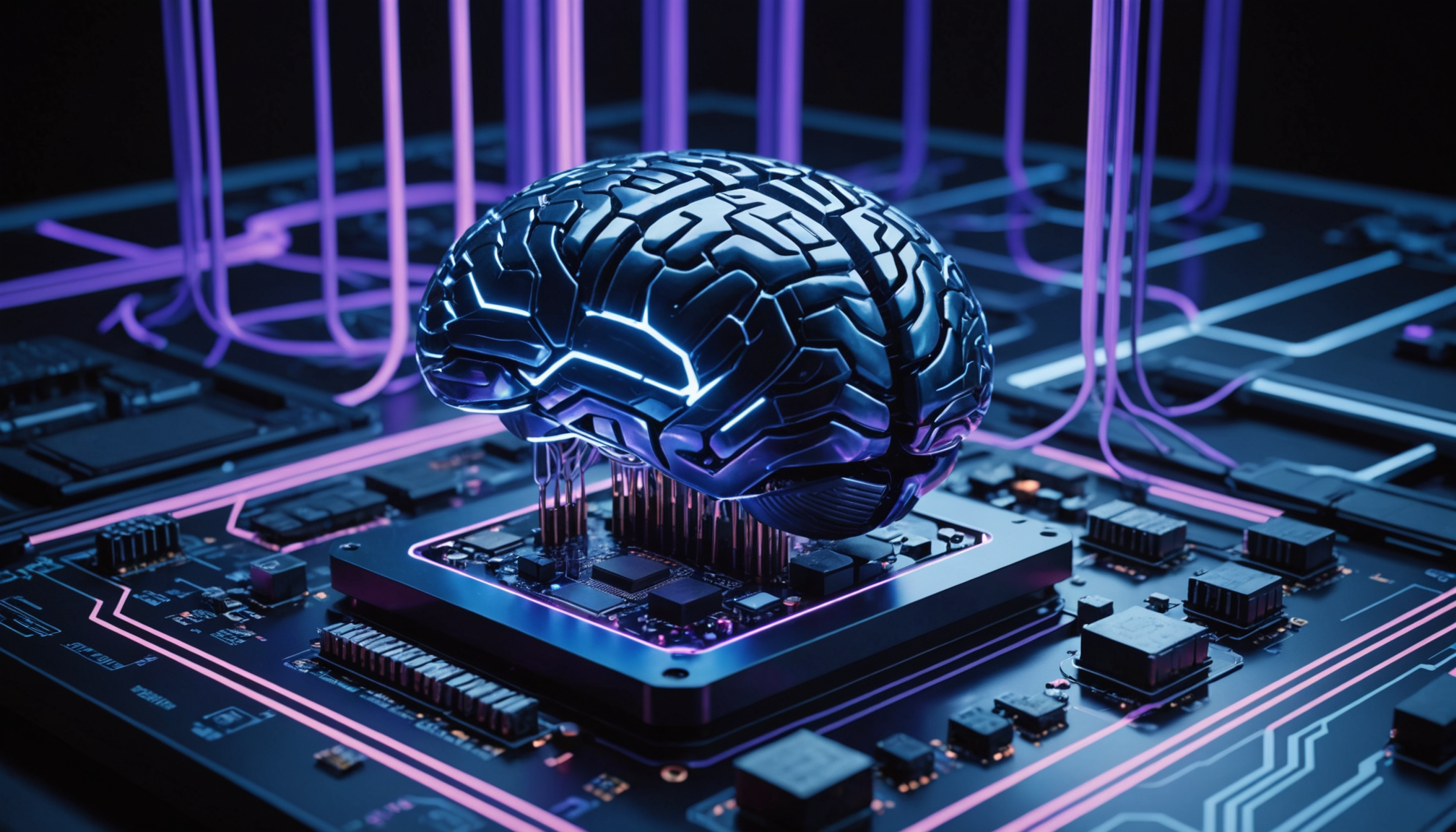
Cambridge’s Neuromorphic Breakthrough Slashes AI Power Demands
University of Cambridge researchers developed a nanoelectronic device using modified hafnium oxide that reduces AI energy consumption by 70%. Unlike traditional chips separating memory and processing, this brain-inspired memristor combines both functions through interface-based switching rather than filament formation. By adding strontium/titanium and creating p-n junction gates, the team achieved stable 0.5V operation at 10nA currents - 100x lower than conventional AI chips. Dr. Babak Bakhit emphasized: "Our devices show outstanding uniformity across 10⁸ switching cycles, solving reliability issues plaguing earlier neuromorphic designs."
UCF’s Digital Twin Project Revolutionizes Biomanufacturing
Haonan Ling at University of Central Florida leads a DOE-funded initiative developing AI digital twins to optimize biofuel production. The system combines real-time sensor data with machine learning to predict bioreactor performance, aiming to reduce scale-up failures by 40%. Collaborating with Kansas State and National Renewable Energy Laboratory researchers, the project could cut sustainable aviation fuel development timelines from 5 years to 18 months. Ling notes: "This framework allows us to test process modifications virtually before costly physical trials."
Converging Paths Toward Sustainable Computing
While Cambridge’s hardware innovation targets data centers’ energy bills, UCF’s software approach demonstrates AI’s potential to reduce resource waste in applied science. Both developments address critical bottlenecks - the Cambridge chip could prevent AI’s projected 10% global electricity use by 2030, while UCF’s digital twins might save 15 million gallons/year in failed biofuel batches. This dual progress highlights how complementary hardware/software strategies can drive sustainability.
Next Frontiers in Efficient AI Systems
Researchers anticipate commercial neuromorphic chips by 2028, with early applications in edge devices and robotics. The Cambridge team plans to integrate their memristors into full-scale neural networks this year. Meanwhile, Ling’s group aims to expand their digital twin platform to carbon capture systems by 2027. Key challenges remain in manufacturing consistency for hafnium oxide devices and validating AI models across diverse bioreactor configurations. NSF program director Karl Berggren notes: "These projects exemplify how fundamental materials research and applied AI must co-evolve to achieve true efficiency gains."