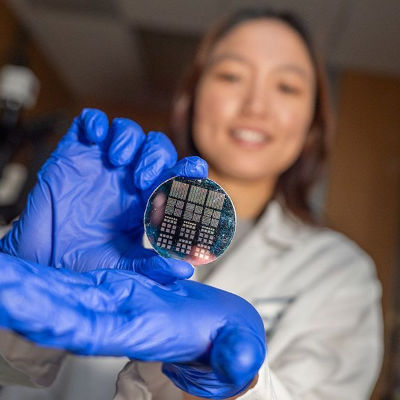

Engineers at UC San Diego have developed a new hardware platform inspired by the brain. The device puts memory and computation together on one chip. Its parts interact with each other like neurons do in the brain. This leads to better speed, accuracy and energy use for two tasks: recognizing spoken digits and finding early signs of epileptic seizures in brain-wave recordings.
This could help create small, low-power hardware for wearable health devices, smart sensors and other independent machines.
In regular computers, memory and processing happen in different places. Data moves between them often, which takes time and power. This has become a big problem as artificial intelligence (AI) grows. Neuromorphic computing tries to copy the brain to fix this. It builds machines that work more like the brain processes information. The new platform is brain-inspired but does not copy the brain exactly.
The researchers use a material known as neodymium nickelate. This is a perovskite nickelate, a quantum material with special electronic features. Adding hydrogen creates small clouds of ions under electrodes. Voltage makes the ions move and change electrical resistance. This acts like memory. Nodes, or connection points, affect each other through the shared material below, similar to signals in brain fluids.
How the platform handles data
The system uses spatiotemporal computing. This processes information by looking at patterns over time and across the physical space of the network. Signals turn into electrical spikes. The network creates complex patterns from them. Another part then classifies the results.
In tests, the platform did well at spoken digit recognition and seizure detection. It caught seizure warnings quickly from short brain data because activity spreads across nodes. It runs in hundreds of nanoseconds and uses about 0.2 nanojoules per operation.
The technology is early stage. Some tests used simulations based on real measurements. Next steps include making larger systems and linking with standard electronics.
This research is published in Nature Nanotechnology.