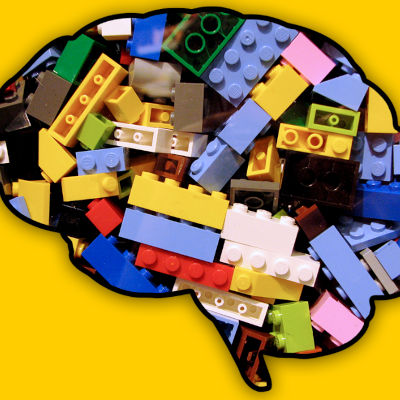

Artificial intelligence (AI) is very powerful, but the human brain is still much better at adapting to new situations. While computers often struggle to learn new things without completely overwriting their old instructions, humans can easily apply past knowledge to new problems. A recent study by researchers at Princeton University, published in Nature, explains how the brain manages this flexibility through a process called compositionality. This technical term simply refers to the ability to reuse existing skills or knowledge to solve new challenges, similar to how knowing how to bake bread makes it easier to learn how to bake a cake.
To understand this process better, the scientists observed monkeys performing different visual tasks. The animals had to look at a screen and decide if a distinct shape looked like a specific object or possessed a certain color. The crucial part of the experiment was that these tasks shared certain requirements. Some tasks used the same rule for judging color, while others required looking in the same direction to answer. This setup allowed the researchers to see if the brain was creating new neural patterns from scratch or reusing old ones.
How the brain builds thoughts
The study revealed that the prefrontal cortex, the area of the brain responsible for complex thinking and decision-making, uses reusable patterns of activity. The researchers described these patterns as cognitive building blocks. Instead of learning a task as one giant, unique instruction, the brain breaks it down into smaller, separate parts. One block might handle identifying a color, while another block handles moving the eyes to the left. When facing a new problem, the brain simply snaps these existing blocks together in a new order.
This method is very efficient. The researchers also found that the brain quiets down the blocks that are not currently needed, which helps maintain focus on the immediate goal. This explains why humans learn faster than machines. Current artificial intelligence often suffers from catastrophic interference, a failure where a system forgets previous information when learning new data. By mimicking the brain's method of reusing components, engineers could build smarter computers. Additionally, understanding this process could help doctors treat conditions like schizophrenia, where patients struggle to adapt to new situations.