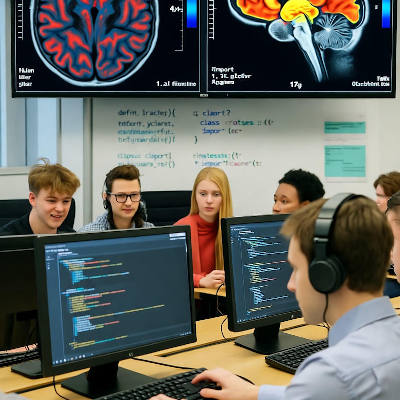

Computer programming runs much of modern life and helped start the rise of artificial intelligence (AI). Yet, not much was known about how brains pick up this skill. Researchers at Johns Hopkins University looked at brain activity in university students before and after they learned coding.
The students took a course in Python, a programming language of growing popularity. Using functional magnetic resonance imaging, or fMRI - a tool that tracks brain activity by measuring blood flow - the study checked how brains reacted to code and plain English descriptions of programs.
After the course, when students read code, parts of the brain linked to logic lit up. These areas, called fronto-parietal regions, are sections involved in planning and problem-solving. Groups of neurons handled the meaning of the code.
Unexpected brain setup before learning
Before the course, when students knew nothing about programming, the same neurons activated as they read simple English explanations of what the programs did. This means by college age, brains already have the basic neural setup for coding.
The work gives clues about brain plasticity, which is the brain's ability to adapt and reuse areas for new tasks. In a Johns Hopkins University press release, the researchers noted that modern skills like coding reuse logic parts that did not evolve just for that. Coding taps into everyday logical thinking that everyone has.
With AI tools making coding easier for more people, the study suggests all humans start with the tools needed for it, mainly logic. Activities like puzzles, games, or family talks that build logic might prepare young people for coding success. The results show people may not need special talents to learn code; the capacity could be built-in from birth.
The researchers have described the methods and results of this study in a paper published in Journal of Neuroscience.