
Researchers at Johannes Gutenberg University Mainz have found that when the brain works hard, certain signals start moving together, like musicians playing in harmony. This is called neural synchrony, which means different parts of the brain working in sync. The study shows this coordination changes based on the situation and is tied to how smart someone is. Neural signals in the midfrontal brain area, a part near the forehead, work better together in people who are good at thinking, especially when tasks get tough, like solving problems.
A Closer Look at Brain Waves
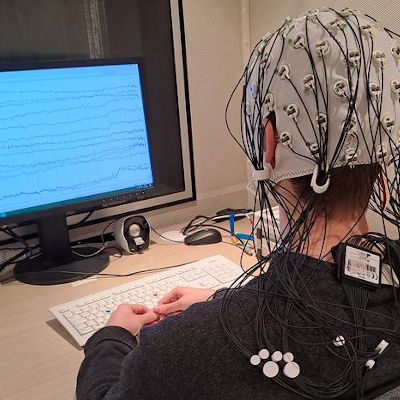
This study published in Journal of Experimental Psychology General looked at theta waves, which are slow brain signals that move between four and eight times per second. These waves show up when the brain focuses hard or controls actions, like deciding what to do next. The researchers used electroencephalography (EEG) to record these waves. They tested 148 people aged 18 to 60 with memory and intelligence tasks, then gave them challenging activities, like deciding if a number is even or odd and then switching to compare it to five. This tested how well their brains adjusted to new rules.
People with higher thinking skills showed stronger theta wave coordination during key moments, like making choices. Their brains stayed focused even with distractions, such as a phone buzzing or noise in a busy place. The study found this coordination wasn’t constant but changed flexibly, like an orchestra following a conductor. The midfrontal area led this teamwork, working with other brain parts, especially when decisions were made, not just when preparing for tasks.
Earlier studies looked at single brain areas, but this one studied how areas connect across tasks. It found that smartness depends on how well the brain’s network works together. The results could help create brain training tools or diagnostics someday, though that’s far off. A new study is now looking at older adults in the Rhine-Main area to learn more about what supports this brain coordination, including speed and memory skills.