Half-Century Physics Quest Ends With Glueball Discovery
Physicists achieved a major milestone in quantum chromodynamics with strong evidence for glueball particles – exotic matter composed purely of gluons. After 50 years of theoretical predictions, Beijing Electron–Positron Collider experiments revealed the X(2370) particle’s decay patterns match glueball characteristics through analysis of 10 billion J/ψ meson decays. This confirmation strengthens the Standard Model while opening new avenues in strong force research.
Neural Interface Breakthrough at World Robot Conference
South Korean researchers unveiled a non-invasive brain-controlled robotic hand at WRC 2026, using 256-channel EEG sensors to achieve 92% motion accuracy through event-related desynchronization pattern recognition. The X-HAND system features tendon-driven actuators and tactile feedback, completing bilateral teleoperation loops. South Korea’s K-Moonshot program announced ₩600 billion ($425M) funding for BCI commercialization through 2030.
Humanoid Robots Shatter Performance Barriers
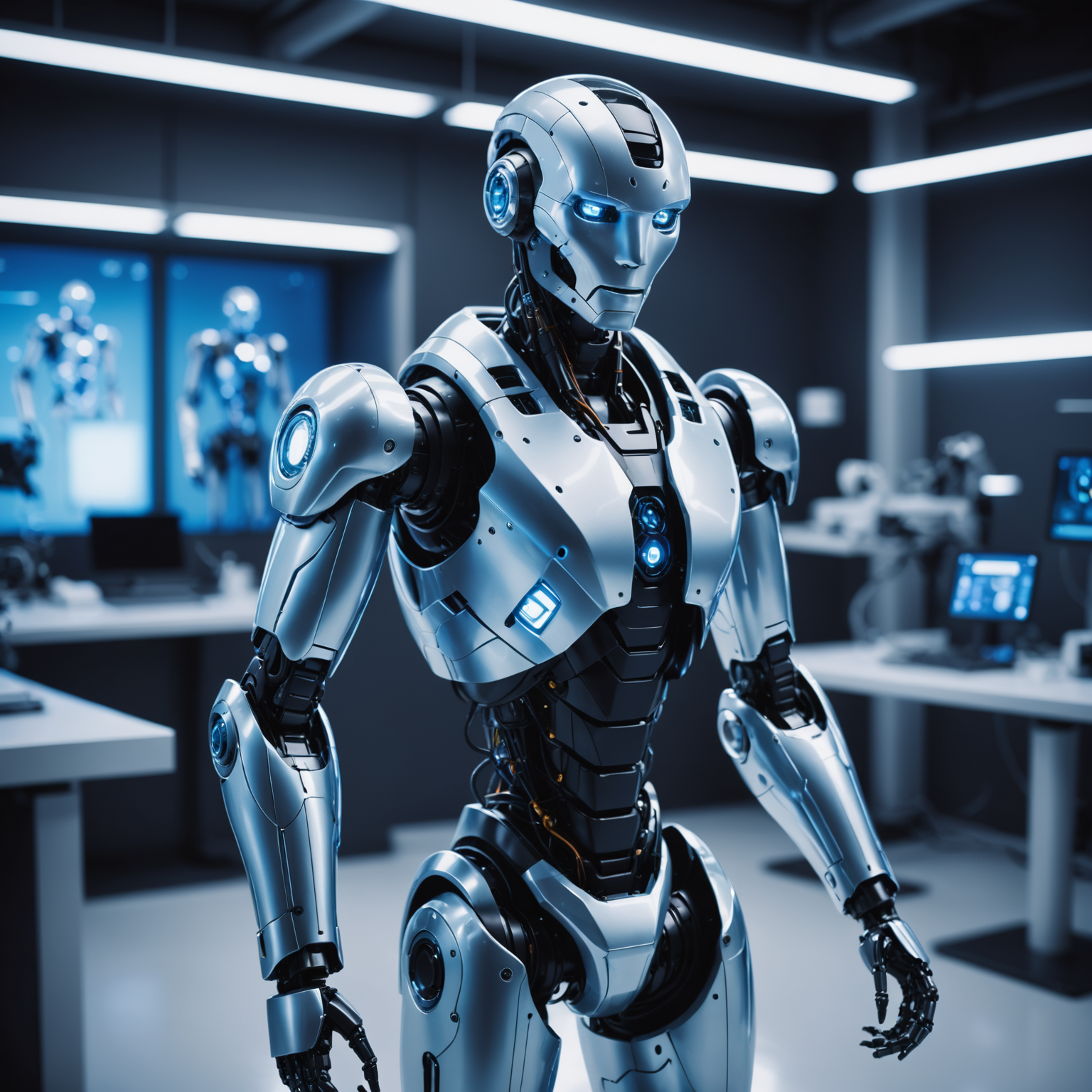
Unitree Robotics demonstrated its next-generation humanoid achieving 28.3 mph (12.66 m/s) sprint speeds and 6.5-foot vertical jumps using 0.85-meter hydraulic legs. The three-month development project utilized novel actuator designs, though independent verification of sustained performance remains pending. This follows Unitree’s STAR Market IPO at $9.04B valuation, with plans to produce 18,000 humanoids annually.
Neutrino Mystery Solved Through Computational Revision
International physics teams resolved the gallium anomaly by updating nuclear cross-section calculations. Revised models account for 92% of previously missing neutrinos in radioactive source experiments, reducing need for sterile neutrino theories. The breakthrough came through supercomputer simulations of electron capture processes in germanium-71 nuclei, reconciling theory with 30 years of experimental data.
Commercial Viability Tests for Chinese Robotics
Industry analysts report growing pressure on Chinese robotics firms to demonstrate practical applications beyond athletic feats. Recent WRC demonstrations emphasized warehouse logistics capabilities, with Unitree announcing partnerships with JD.com for fulfillment center deployments. China accounts for 90% of global humanoid shipments, with 2,056 robots competing at Beijing’s World Humanoid Robot Games.
Emerging Frontiers in Physical AI Systems
NVIDIA’s GR00T platform is driving innovation in embodied intelligence, with June 2026 updates enabling humanoid training through 20,000+ hours of egocentric video data. The EgoScale framework demonstrates 54% performance gains in robotic manipulation tasks, while Physical Intelligence’s π0.6 models achieve 165 items/hour packaging speeds in real-world deployments.