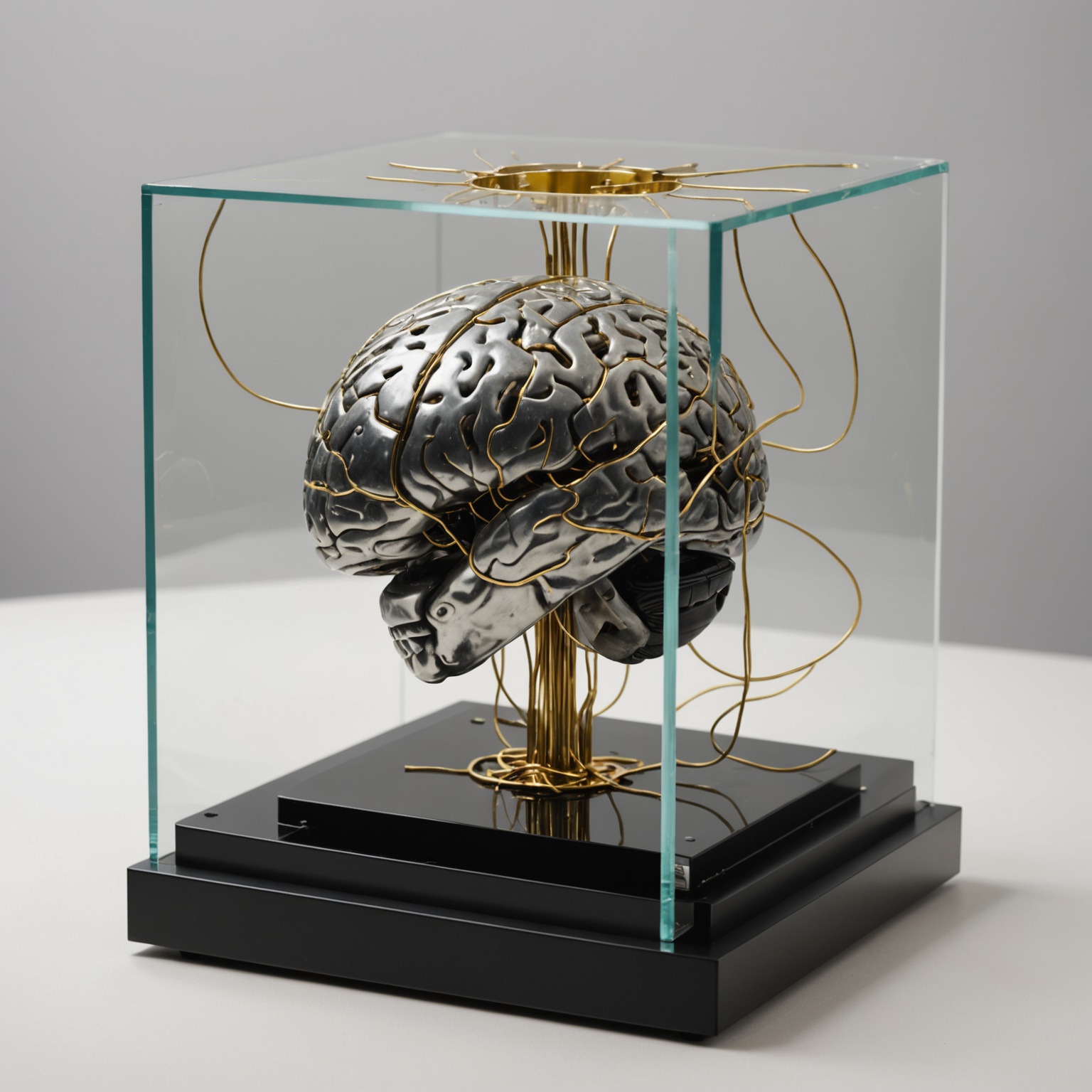
World’s First MRI-Integrated Brain-Computer Interface Launched in China
Researchers from Shanghai United Imaging Healthcare and Tianjin University unveiled the uMR Shenguan platform – the first system integrating MRI scanners with brain-computer interface (BCI) technology in a closed feedback loop. Unlike previous setups using separate devices, this MRI-BCI integration achieves:
- Millisecond-level neural signal tracking combined with sub-millimeter structural imaging
- Real-time compensation for MRI-BCI hardware interference
- Continuous measurement of neuromodulation effects during treatment
The system’s 3T high-field MRI captures white matter fibers at 0.55mm resolution, enabling researchers to avoid critical neural pathways during interventions. As Haihe Laboratory director Ming Dong noted: "This moves BCIs from signal decoding toward true mechanistic understanding of brain processes." Early medical applications target motor rehabilitation and psychiatric disorders, with consumer uses in education and gaming anticipated by 2027.
Inherent’s Compact AI Outperforms Frontier Models in Research Tasks
London-based Inherent, founded by DeepMind alumni, demonstrated its Faraday AI agent successfully replicating complex biology studies using the 27B-parameter Qwen model – significantly smaller than competitors’ systems. In benchmark tests against GPT-5.5 and Claude Opus 4.8, Faraday achieved:
- 94% first-attempt success rate in protocol replication
- 40% faster task completion through parallel agent coordination
- Improved experimental design through reinforcement learning
Chief Scientist Edward Hughes emphasized their focus on developing "research taste" – the AI’s ability to prioritize scientifically meaningful experiments. The team plans to expand from paper replication to novel discovery tasks in Q4 2026.
Major AI Platforms Roll Out August Updates
Key developments from leading AI providers include:
- Snapchat: Bans purely AI-generated Spotlight videos while allowing AI-enhanced content
- OpenAI: Launches ChatGPT Work agent for multi-hour project management
- Meta: Releases Muse Code beta coding assistant with 1M token context window
- Adobe: Expands Firefly audio tools with AI-generated music/sound effects
Notably, ByteDance implemented MPA-approved copyright safeguards for its Seedance AI video generator following Hollywood pressure.
Converging Trajectories: Medical Imaging Meets AI Autonomy
The MRI-BCI breakthrough and Inherent’s results share three key innovation drivers:
- Real-time feedback integration: uMR Shenguan’s closed-loop MRI monitoring parallels Faraday’s continuous experiment refinement
- Hardware-software co-design: Both solutions required custom engineering beyond off-the-shelf components
- Scalability focus: Chinese teams emphasize clinical translation while Inherent optimizes model efficiency
Researchers predict these developments will accelerate hybrid systems combining physical sensing platforms with AI analysis layers.
Neurotech Watchlist: 2026-2027 Expectations
Industry observers should monitor:
- Human trials of non-invasive BCIs using China’s MRI integration platform
- Inherent’s planned 20-25 person team expansion and larger model releases
- Emerging standards for AI-generated content in research/public communications
- Cross-industry collaborations between medical imaging firms and AI labs