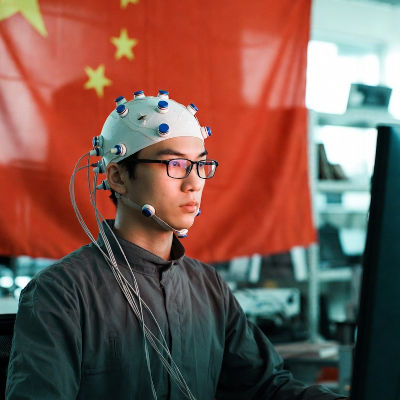

China is quickly advancing in brain-computer interfaces, or BCIs - devices that connect the human brain to computers, TechCrunch reports. Chinese companies are moving from lab research to large-scale production. Startups are developing both implantable BCIs, which involve surgery to place electrodes in the brain for precise signals, and noninvasive ones, which use external tools like headsets to read brain activity safely but with less detail.
Phoenix Peng, who started two BCI companies, sees strong growth ahead. His firms include one making brain implants and another using ultrasound for noninvasive control. Provinces like Sichuan and Hubei have set prices for BCI medical services, helping include them in national health insurance. Over time, Peng predicts BCIs will go beyond treating illnesses to improving human abilities, like linking brains directly to artificial intelligence (AI)
Key developments in China's BCI sector
In 2025, China's government released a plan to achieve major technical goals by 2027 and build a full industry by 2030. This includes creating global-standard companies. Progress stems from four main drivers: strong government policies that align standards and funding, with a large brain science fund announced in Shenzhen; vast clinical resources, such as big patient groups and low-cost trials, leading to over 50 implant tests by mid-2025; mature manufacturing in semiconductors and medical hardware for fast prototyping; and rising investments, like a $48 million round for StairMed Technology.
China's first fully wireless implanted BCI trial helped a paralyzed patient control devices. The market grew from about $450 million in 2024 to over $530 million in 2025, with forecasts reaching $17 billion by 2040. Noninvasive options, like those from BrainCo, aim to ease adoption by avoiding surgery, targeting issues like chronic pain. Emerging methods include magnetoencephalography and hybrids. Looking ahead, regulations will focus on safety, data protection, and ethics, such as better informed consent and unified standards to match global norms.