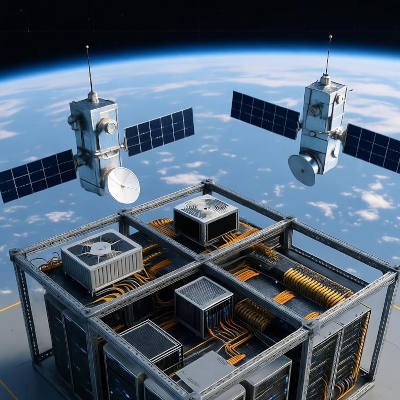

Scientists at NTU Singapore have proposed putting data centers in space to make computing more sustainable. The data centers would operate in low Earth orbit. The plan aims to create carbon-neutral systems, meaning they produce no net greenhouse gases that harm the environment. It is especially useful for places like Singapore, where land is limited and building on the ground is expensive. The study, published in Nature Electronics, explains how space provides free solar energy from the sun and cooling from the very cold temperatures there, around minus 270 degrees Celsius.
The proposal comes at a time when demand for computing, driven by artificial intelligence (AI), is expected to grow a lot by 2030. On Earth, data centers use much electricity, and in Singapore, they already take up seven percent of the nation's power, set to rise to 12 percent soon.
How orbital data centers could work
The researchers describe two types of space-based systems. First, orbital edge data centers would add special processors to satellites that collect images or data. These would process information right in space and send only the key results to Earth, cutting down on energy use and delays. Second, orbital cloud data centers would use groups of satellites linked together, with solar panels for power and coolers to release heat into space. This setup could handle big tasks like science simulations or training AI models.
To check if this is practical, the scientists built a digital twin, a virtual copy, to model power use, cooling, and energy from the sun. It shows the systems could offset the carbon from rocket launches in a few years. Advances like reusable rockets and space-ready electronics make it possible now. Overall, this approach avoids land limits and high costs on Earth, offering a way to expand computing without adding to climate problems. The work was funded by several grants and reflects efforts to innovate for a better future.
