
Physicists have created a new digital-analogue quantum simulator to study complex physical processes with precision.
The physicists have described the methods and results of this study in a paper published in Nature.
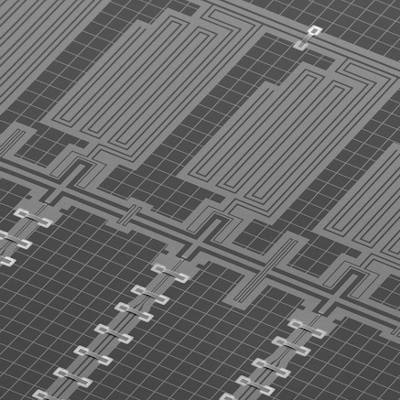
The new simulator uses 69 superconducting qubits on a quantum chip developed by Google, operating in both digital and analogue modes. A research summary published in HPCWire highlights that the chip in question is the Google’s 69-qubit Sycamore device. There are plans to use the new Willow chip.
Google's research scientist Trond Andersen said that the new simulator can do computations that "would not be possible on on even the fastest classical computers,” HPCWire reports.
In digital mode, qubits act like logic gates but can be in multiple states due to quantum superposition. Analogue mode directly simulates physical interactions, like magnetic properties in solids. This combination allows for flexible and precise simulation of various physical problems, from solid-state physics to astrophysics.
In experiments, the physicists set initial conditions digitally, like adding heat to a solid, then observe how the system evolves in analogue mode, similar to watching milk spread in coffee. This setup helps study how systems reach thermal equilibrium or how magnetic domains form in materials.
Toward universal quantum simulators
The simulator isn't limited to just thermalisation; it's a step toward a universal quantum simulator. For example, it could investigate phenomena like frustrated magnetism.
In frustrated magnetism, magnetic arrangements can't settle into a regular pattern on certain shapes, useful for high-density memory chips. Beyond that, the simulator could aid in developing new materials, drugs, and even tackle cosmic mysteries like black holes and information paradoxes.
In a press release issued by the Paul Scherrer Institute (PSI), Andreas Läuchli highlights that this simulator opens new research pathways, not just at Google but also at PSI, where further quantum technologies like trapped ions or Rydberg atoms are explored.
This work could also benefit PSI's large research facilities by providing new experimental ideas and helping interpret unexpected results.