
Elongated fish like eels and lampreys move in striking ways. They swim strongly and crawl across bumpy surfaces. These creatures can still swim if part of their spinal cord, the long nerve structure in the back that directs body actions, is harmed. Such damage would cause stillness in most animals with spines. The nerve systems driving this talent remained unclear for a long time.
Experts from EPFL’s School of Engineering (press release), Tohoku University (press release), and the University of Ottawa (press release) crafted a number-based model of a nerve network. Published in the Proceedings of the National Academy of Sciences, this model blends stretch and pressure inputs to manage motion in eels and kin. It supposes each body section holds a nerve cycle akin to a central pattern generator that forms rhythmic actions and self-tunes via stretch and pressure responses.
Building more resilient robots
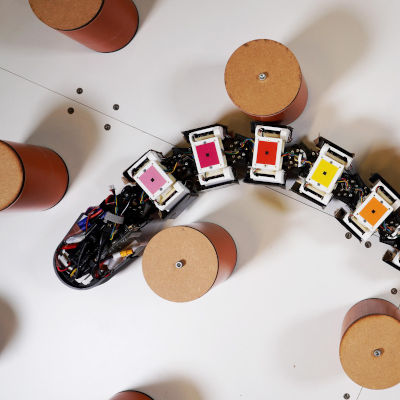
The group tried the model through digital trials and tests with eel-mimicking robots able to function in water or on land. In water checks, the model swiftly formed steady swimming, with stretch input crucial for fast steadiness. Notably, the identical nerve network allowed land crawling and dodging barriers, as stretch input aided shoving against items for ahead force.
This implies swimming nerves can support ground travel, so the ancient shift of spined animals from oceans to earth might have adapted water networks rather than built fresh ones. It boosts insight into motion control's early roots.
They also probed why eels swim post spinal cord breaks. Outcomes indicate that if spread-out nerve cycles hold some self-rhythm skill, joined with stretch and pressure inputs, they yield synced swimming in simulations and robots across the break point.
Apart from animal action details, these discoveries might shape robots that endure harm and travel in unsure places like crisis zones. Ways mixing many sense inputs could craft devices that handle water and rough ground alike. Knowledge of motion after spine harm might steer scattered control setups free of brain oversight, drawing on body senses for self-running tools.