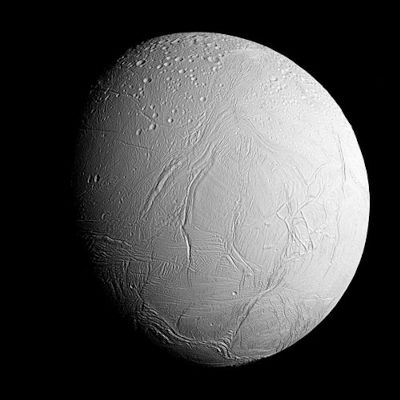

New research from NASA's Cassini mission has revealed that Enceladus, a moon of Saturn known for its potential to host life beyond Earth, is losing heat from both its north and south poles. This discovery suggests the moon has a stable environment over long periods, which is important for life to possibly develop. Enceladus is an icy world with a global subsurface ocean, meaning a large body of liquid water hidden under its frozen surface. This ocean is salty and contains heat, along with chemicals like phosphorus and complex hydrocarbons, which are organic compounds made of hydrogen and carbon. These elements make the ocean one of the most promising places in our solar system for life outside Earth.
The heat comes from tidal heating, a process where Saturn's gravity pulls and squeezes the moon as it orbits, creating internal warmth. For the ocean to stay liquid and support life, the moon must balance the heat it gains from this process with the heat it loses. If it loses too little, the ocean might freeze; if too much, the environment could change rapidly.
Global heat balance confirmed
Until now, scientists thought heat loss happened only at the active south pole, where plumes of water ice and vapor shoot out from cracks in the surface. But by analyzing Cassini data from the north pole in winter and summer, researchers found the surface there is warmer than expected, about 7 degrees Kelvin higher. This warmth indicates heat is leaking from the ocean below through the ice shell. The research is published in Science Advances.
The ocean can remain liquid for geological timescales, long periods in planetary history, providing a steady setting where life might emerge. The study also estimates the ice shell is about 25 to 28 kilometers thick on average, useful for future missions that might send robots to explore the ocean. Overall, these findings highlight Enceladus as a key target in the search for extraterrestrial life and show the value of long-term space missions in uncovering such secrets.