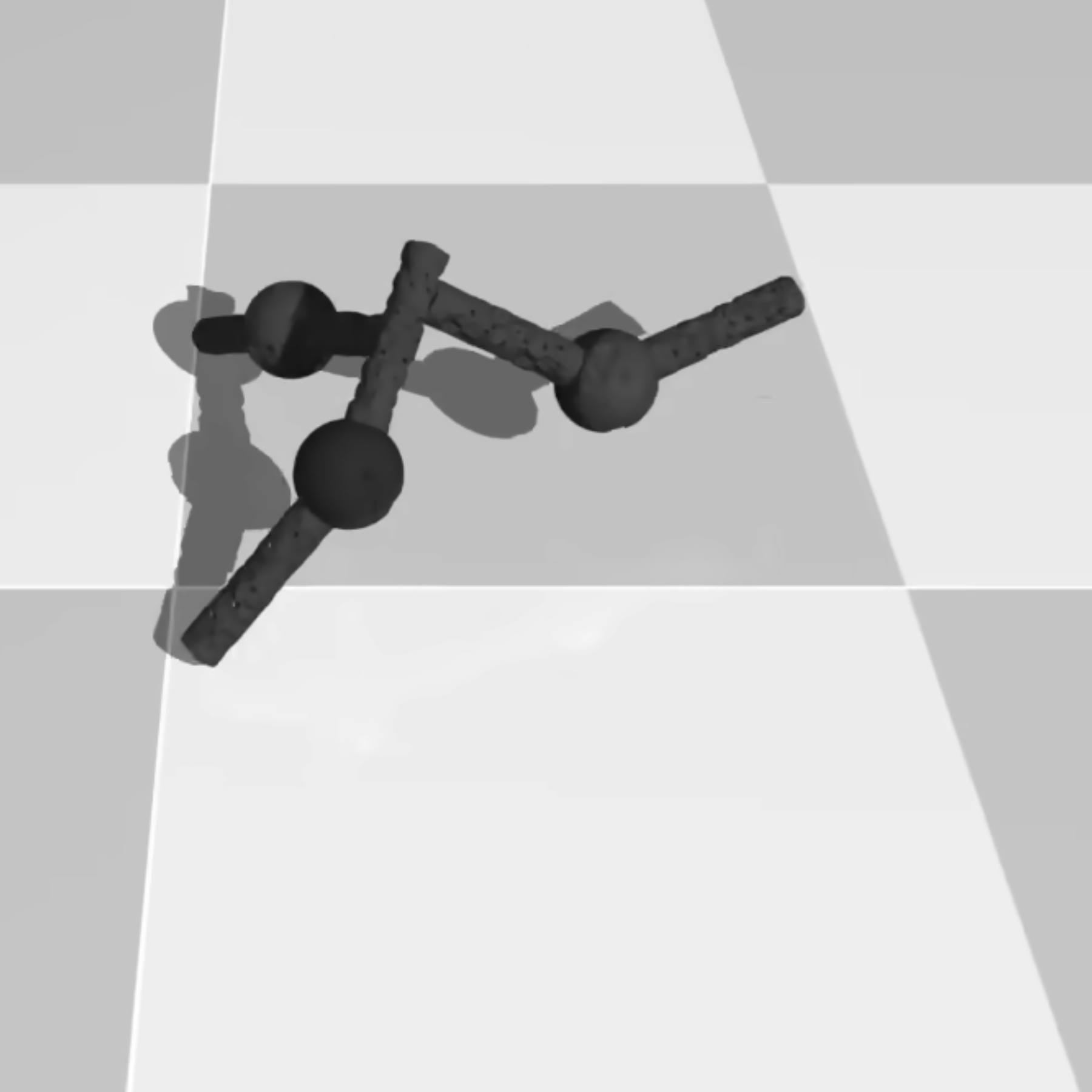

Engineers have created modular robots - "legged metamachines" made from connected parts that act as a single adaptable machine - can join together in many ways and keep working even after harm. Each part is a small, self-contained robot with its own motor for movement, battery for power, and computer for control. Alone, one part can roll, turn, or jump. When parts snap together like building blocks, they form larger machines that gain new skills (YouTube video).
To find the best shapes, the engineers used artificial intelligence (AI) and evolutionary algorithms. The AI started with simple leg-like parts, each about half a meter long and shaped like sticks joined by a sphere. Inside the sphere are a circuit board for thinking, a battery for energy, and a motor for action. The algorithm mixed these parts into new forms, simulated their movement in a virtual world, and kept the strongest ones while discarding weak ones. This led to odd shapes that move like seals, lizards, or kangaroos, unlike typical robot designs.
The machines can flip upright if turned over, jump obstacles, and spin in the air. Since they are robots built from other robots, they handle big damage well. Broken pieces do not stop the whole machine; they keep moving and can rejoin.
Real-world testing and future potential
In outdoor tests on rough ground like gravel, grass, and mud, the metamachines moved freely without extra setup. They adapted to lost parts by changing how they work, and separated pieces could roll back independently. This mix of physical joining and AI design makes them tough and flexible, unlike stiff traditional robots that fail if one part breaks.
This work builds on past studies where AI quickly designed simple walking robots. Now, these evolved machines sense their world, learn, and survive harsh conditions. They suggest a future for robots that evolve like life, useful for tasks in wild or dangerous places. The engineers noted that these are the first robots to evolve in a computer and then operate outdoors right away.
This research is published in PNAS.