
Scientists have shown that light in a quantum entangled state can greatly reduce the work needed to study noisy quantum systems. In many fields, learning the behavior of a complex system involves many repeated measurements to map out the noise. This can require an enormous number of tests that grow too fast with the system's size, making it impractical.
The researchers used entangled light to tackle this. Entanglement means two or more particles or light beams are connected so that the state of one instantly influences the other, no matter the distance. They set up an optical system where light pulses share the same noise pattern. By entangling two beams - one to probe the system and one as a reference - they could compare them in a single measurement. This joint check removes much of the fuzziness, pulling out more useful data per try than traditional methods.
This study is published in Science.
How entanglement speeds up learning
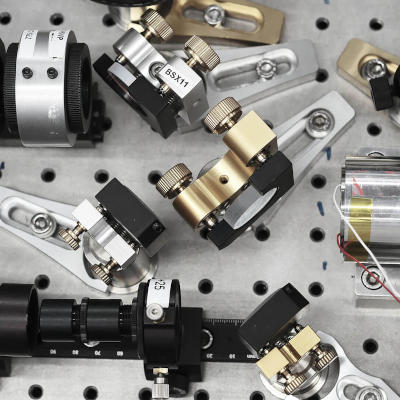
In the experiment, done with common optical parts at telecom wavelengths, they learned the system's behavior in just 15 minutes. A classical approach, without entanglement, would take much longer. This proves a quantum advantage, meaning the quantum method does something impossible for any classical system in reasonable time.
Ulrik Lund Andersen, a professor at the Technical University of Denmark, noted this is the first such advantage in a photonic system, which uses light for quantum tasks. "We built a process we could control and asked a simple question: Does entanglement reduce the number of measurements you need to learn such a system? And the answer is yes, by a lot," says Andersen in a press release. "We learned the behaviour of our system in 15 minutes, while a comparable classical approach would take around 20 million years."
The findings could apply to areas like sensing, where detecting weak signals is key, or machine learning, where finding patterns in data is key. While not yet aimed at real-world devices, it highlights how quantum tools can outperform classical ones in practice.