Exploring animal consciousness with a new method

Exploring animal consciousness with a new method

Researchers suggest a marker method to study animal consciousness, aiming to uncover insights about minds across species.
GP
Giulio Prisco
Feb 28, 2025
2 min read

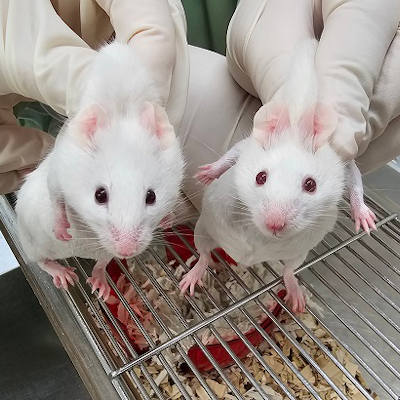
Researchers have come up with a fresh way to study animal consciousness. Their method might help us see how animals think and feel compared to humans.

The approach uses a marker method. This means looking at behaviors and body features tied to consciousness in people, then checking if animals have them too. Consciousness here means being aware of things like pain or sights. The researchers think this could shed light on big questions about what consciousness really is, maybe even helping us understand our own minds better.

The researchers argue that, if animals act like humans in ways tied to consciousness, it might show they’re conscious too.

The researchers have described the methods and results of this study in an essay published in Science.

More open-minded research is needed

Their essay builds on the “New York Declaration on Animal Consciousness.” That declaration, backed by over 500 scientists, claimed consciousness likely exists in all vertebrates, like birds and fish, and many invertebrates, like octopuses.

People have wondered about animal minds for a long time. Even today, experts don’t fully agree on how widespread consciousness is among animals. The researchers suggest focusing on specific parts of consciousness, like feeling pain or seeing things. They want scientists to look for clues, or markers, in different animals to see if those parts are there.

They also push for studying more than just pain, like maybe joy, and using methods that don’t harm animals. But they admit one marker alone isn’t enough proof. For example, talking is a sign of conscious thought in humans, but fancy computer programs can fake it without being conscious. Context matters a lot, they say. Still, they believe keeping an open mind and doing more research is key. One day, we might say with confidence that many animals are conscious. For now, the evidence isn’t perfect, so they urge everyone to keep exploring.

About the Writer

More from Mindplex

Keep reading

Three more ideas worth your time.

Browse News

Discussion

Join the discussion

Sign in to share a response with the community.

Type @ to mention someone Type / or use + to add a block Highlight text, then choose Link
Loading editor

Comments cannot be edited after posting because they become part of the reputation record. Give yours a quick review first.

HC

Henriq C

1 year ago

Yea, it is quite natural starting point to take something we already know which is human consciousness or human experience. Then try to identify core contributing ingredients of that cognitive structure and attribute certain ways of experiencing to those structures. Finally extrapolate over anything that has such a structure. Consciousness is really a hard topic indeed.When dealing with other human beings, the more we exchange information with each other, the more precisely we can emulate each other's cognition by our own cognitions. One increasingly learns what it is like to be this other person and how she experiences different situations. To me, this is pretty much the definition of empathy.Now, I'm just wondering how much a human cognition could emulate other cognitions than human ones. With other humans (often after hard imaginative thinking and empathizing) one can suddenly realize like "oh now I understand how it all looks from your viewpoint". There is a kind of confirming feedback from discovering consistency. It all begins to "make sense".Might there be systematic or structured approaches to this empathization question(?) Could we have a mechanism to start running experiences of other entities by using our human brain(?) Maybe not perfect ones but reasonably close ones. Higher complexity cognition could do that to a lower complexity cognition.Ultimately, I would say that there is no way to experience something without experiencing it. We have high confidence that our fellow humans are consciouss in a very same way as we are because we know their cognitive structures are so similar to our own. But to be able to gain any more detailed knowledge one has to bridge the gap between these different cognitions. Mistaken assumptions about others' viewpoints and experiences are a source of conflict time after time.