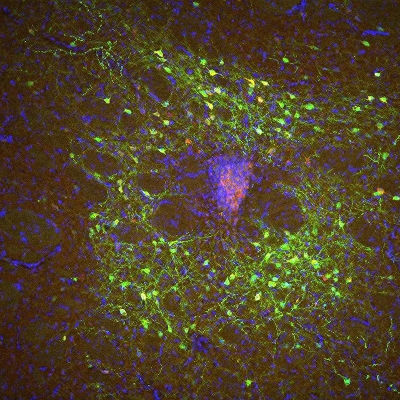

Gene therapy has already treated several conditions, including immune deficiencies, hereditary blindness, hemophilia, and Huntington’s disease, a fatal brain disorder that causes uncontrolled movements and thinking problems. A new study published in Neuron shows further progress. Researchers at Rice University and Emory University found that special proteins called released markers of activity, or RMAs, work just as well in monkeys as in mice. RMAs are lab-made proteins designed to leave brain cells, cross the blood-brain barrier, and stay in the blood for hours. This allows scientists to measure gene activity inside the living brain with a simple blood test instead of surgery or scans.
Large-animal tests like this in monkeys are a vital step before any treatment reaches humans, and few lab ideas ever get this far. The study proves it is fairly easy to adapt the RMA method from mice to monkeys.
Advantages for long-term research
The technique is highly precise and can track activity in as few as tens to hundreds of neurons. It is also flexible. Scientists can design different RMAs to monitor several genes at once across various brain areas. Lab methods such as mass spectrometry, which identifies molecules by their exact mass, can detect many markers in one blood sample.
This opens the door to longitudinal monitoring, or repeated checks on the same animal over months and years. For brain conditions such as addiction, a single snapshot from a biopsy or scan is not enough. Watching the same brain over time reveals how gene changes unfold and shape future health. The RMA platform was created using a small part of antibody proteins that naturally exit the brain into the blood. A minor change in that protein section made it work in monkeys. Then the researchers tested the tool in monkeys.
By replacing repeated brain imaging with blood tests, the method saves time and resources. It could help bridge the gap between animal studies and human therapies for neurological diseases.