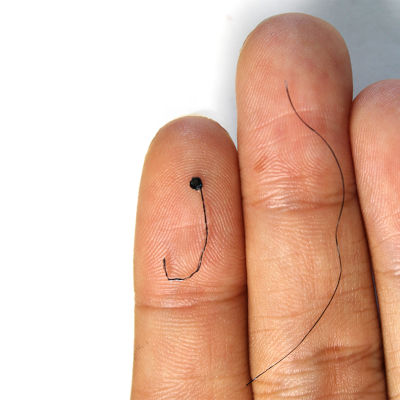

Scientists at Penn State have developed a tiny device for brain monitoring. This device looks like a hair strand. It replaces the traditional heavy metal electrodes used in electroencephalography (EEG). EEG measures brain electrical activity to diagnose conditions like epilepsy.
Traditional electrodes need sticky gels and wires. Gels can irritate skin. Applying gels takes time and can be messy. If gels dry, scientists must reapply them. This process changes impedance, the resistance to electrical flow. Changing electrode positions also affects brain signals. Rigid electrodes shift during head movement, causing inconsistent data. The new device solves these issues. It uses a hydrogel, a soft, water-based material, made by 3D printing. This creates a small dot electrode and a thin wire. The electrode sticks to the scalp without gels, using a special bioadhesive ink, a sticky printable substance.
Device enhances comfort and signal quality
This hairlike electrode captures brain signals clearly. It stays stable for over 24 hours. The device is lightweight and flexible. It doesn’t move when combing hair or wearing a cap. This makes it ideal for long-term monitoring. The electrode matches the scalp closely, improving signal quality. It performs as well as gold electrodes, the standard for EEG.
Unlike traditional systems, it doesn’t need removal or reapplication. This ensures consistent data across sessions. The device looks like hair and blends in. Scientists can print it in colors to match hair. This makes it discreet for continuous wear, boosting comfort and reliability. Currently, the device uses wires to a machine. In the future, scientists aim to make it wireless.
This would let people move freely during monitoring. The device is cheap to produce. It could work in hospitals or wellness products. Funding from health and university groups supported this work. The scientists have described the methods and results of this study in a paper published in npc Biomedical Innovations.