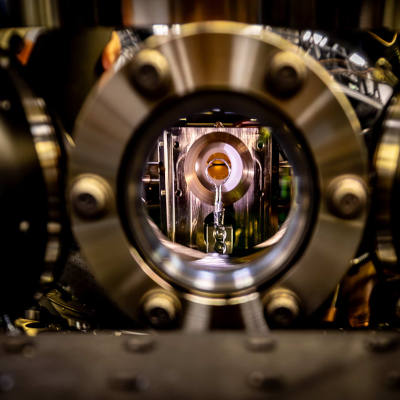

Researchers at the University of Sydney used quantum computing to simulate how real molecules change when light hits them. The researchers used a trapped-ion quantum computer at the University of Sydney Nanoscience Hub. This machine traps ions to do calculations.
This technology allows scientists to study how molecules act and change when light excites them. The researchers looked at ultrafast changes, which happen in femtoseconds.
The simulation slows these fast changes down by 100 billion times. This allowed the researchers to see the changes in milliseconds. They studied three molecules: allene, butatriene, and pyrazine. These molecules have carbon, hydrogen, and nitrogen atoms. The simulation shows how these molecules absorb light, vibrate, and change electronically.
Current supercomputers can simulate the interactions for these particular molecules, but not for more complex molecules. The researchers are persuaded that quantum computers will be able to simulate more complex molecules.
Future uses in medicine and energy
This work can help many fields. It can improve photosynthesis studies. It can also help understand DNA damage from UV light. This knowledge can improve sunscreen design. In medicine, it can help photodynamic therapies, treatments that use light to fight cancer. It can also lead to better solar energy systems, which turn sunlight into electricity.
The researchers used an analog quantum simulation method. This method needs fewer resources than other quantum computing ways.
In fact, the researchers used just one trapped ion instead of many. “Performing the same simulation using a more conventional approach in quantum computing would require 11 perfect qubits and 300,000 flawless entangling gates," notes a University of Sydney press release. "Our approach is about a million times more resource-efficient, enabling complex chemical dynamics to be studied with far fewer resources than previously thought possible.”
This breakthrough shows quantum computers can study real chemical processes. It opens new paths for discoveries in chemistry, medicine, and energy. The study is published in Journal of the American Chemical Society.