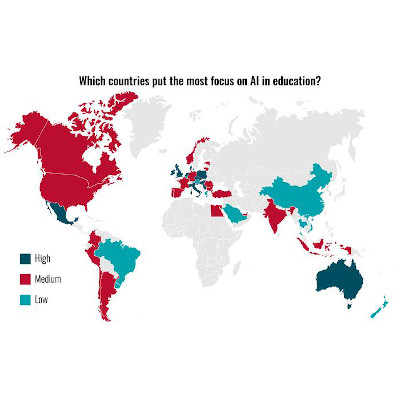

Artificial intelligence (AI) is becoming part of many areas, like communication, advertising, and even grading schoolwork. As AI grows, it’s changing the kinds of jobs people do. A study from the University of Georgia looks at how 50 countries are getting ready for these changes by focusing on education and training for workers. The study shows that nearly half of today’s jobs might disappear in the next 20 years because of AI. However, new jobs will also appear, especially for people who know how to use AI. Most children in elementary school today will likely work in these new jobs, which will need advanced AI skills.
The study examines each country’s national AI strategy: the goals, how the goals will be achieved, examples of projects, how success will be measured, support for projects, and timelines. Countries were grouped into high, medium, or low priority based on how detailed their plans were for preparing workers and students for AI. Only 13 countries, mostly in Europe, plus Mexico and Australia, gave high priority to AI training and education. These countries often have more money for training and value lifelong learning. The United States was one of 23 countries with medium priority, meaning its plan was less detailed.
Variations in AI preparation approaches
Many countries share some goals, like improving AI programs in universities. Some also want to teach AI skills to younger students in elementary or high schools. More than half of the countries focus on training workers while they’re on the job, offering programs or internships tailored to specific industries. However, few countries help groups like the elderly or unemployed learn basic AI skills. Some countries, especially in Asia, focus more on things like national security or healthcare instead of education. Countries like Germany and Spain take a long-term approach, encouraging interest in AI from a young age, even in preschool. The study points out that skills like creativity and communication, called soft skills, are important because AI can’t replace them. Yet, few countries emphasize these skills in their plans. The study suggests that learning from other countries could help the U.S. and others improve their strategies for preparing workers and students for an AI-driven future.