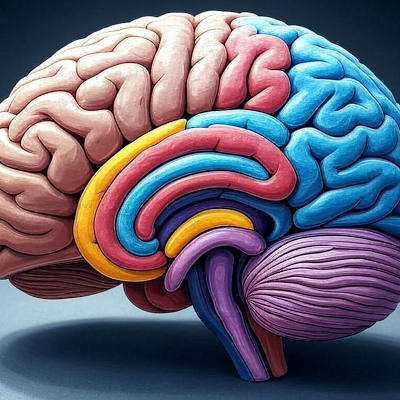

Humans use five senses - sight, hearing, touch, taste, and smell - to understand the world. Scientists know these senses trigger different brain areas. A Yale study now shows all senses activate a deep brain region controlling consciousness. The study included collaborators from Harvard Medical School.
The study, published in NeuroImage, explains how sensory perception works. Perception is how the brain interprets sensory signals. The study could help create treatments for disorders affecting attention, arousal, or consciousness. Arousal is the brain’s alertness level.
The researchers studied subcortical arousal systems. These are brain networks managing sleep and wakefulness. Earlier research linked these systems to consciousness disorders like coma or epilepsy. Past studies focused on single senses. The researchers explored if multiple senses use the same networks. It also examined how attention shifts affect these networks. Attention is the ability to focus on specific information.
Key findings on brain activity
The study analyzed fMRI data from 1,561 healthy adults. fMRI, or functional magnetic resonance imaging, measures brain activity by tracking blood flow. Participants performed tasks using vision, hearing, taste, and touch. Researchers found all senses activate shared subcortical networks. Surprisingly, when participants focused intensely, all senses triggered two deep brain areas: the midbrain reticular formation and the central thalamus. The midbrain reticular formation helps regulate alertness. The central thalamus relays signals between brain regions. Sudden attention shifts during tasks were key to activating these areas.
The researchers noted the unexpected finding that all senses stimulate the same brain regions during focus. This discovery shows these regions are vital for consciousness and attention disorders, like attention deficit hyperactivity disorder, which affects focus. The findings could lead to better drugs or brain stimulation treatments. According to the researchers the study advances understanding of normal brain function and consciousness. The researchers emphasized the importance of these brain regions for restoring consciousness. This research marks a step forward in understanding how senses and attention shape awareness.