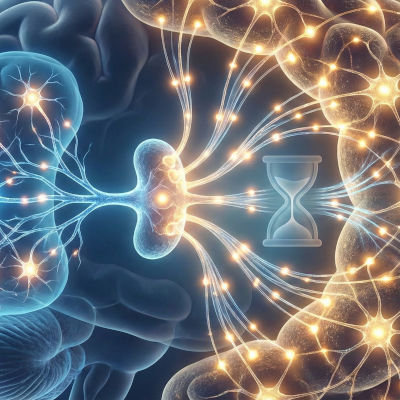

Scientists have long studied how our minds turn daily moments into lasting memories that shape who we are. For many years, the standard view was that memory involved a simple hand-off between two main areas. These are the hippocampus, the brain region responsible for forming short-term memories, and the cortex, the outer layer of the brain where long-term memories are eventually stored. Experts previously thought that biological switches simply turned on to save a memory or remained off to let it fade. However, this model could not explain why some memories last only weeks while others persist for a lifetime.
New research published in Nature offers a more complex explanation involving a cascade of molecular timers. To make this discovery, researchers used a virtual reality system to observe behavior in mice. They also utilized CRISPR, a precise technology used to edit DNA, to manipulate specific genes. They found that the thalamus, a structure in the middle of the brain that acts as a relay station for information, plays a critical role. It helps select which memories are important enough to be sent to the cortex for long-term storage.
A sequence of biological timers
The study reveals that memory is not a single event but a stepwise process regulated by specific molecules. The researchers identified three key regulators that act like timers, turning on at different stages to promote durability. After a memory is formed, a molecule called Camta1 ensures it survives the initial phase. Later, a regulator named Tcf4 activates to provide structural support to the brain cells holding the memory. Finally, a protein called Ash1l creates changes that make the memory permanent.
These findings suggest that the brain actively promotes important experiences while allowing others to fade. This insight could have significant implications for treating memory disorders. By understanding which gene programs preserve information, medical experts hope to eventually find ways to bypass damaged areas of the brain in patients with Alzheimer’s disease, routing memories through healthy circuits to prevent memory loss.