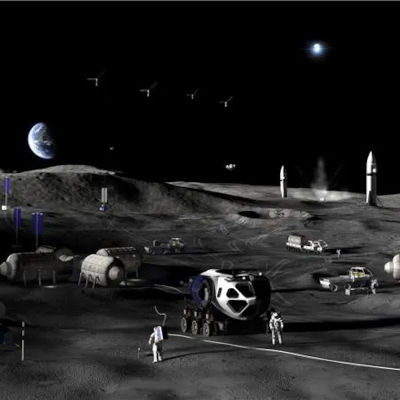

NASA has entered a new aggressive era defined by its "Ignition" event, prioritizing a return to the lunar surface before the end of President Trump’s term. To meet this ambitious timeline, the agency is fundamentally restructuring the Artemis program. Artemis III has been repurposed as an orbital systems test in 2027, serving as the final precursor to the Artemis IV landing. In a significant strategic pivot, the Gateway station has been paused to focus all available resources on surface-level infrastructure. This strategy will unfold in three distinct phases: an initial surge of robotic missions via the Commercial Lunar Payload Services program, the establishment of early semi-habitable infrastructure with international partners like JAXA, and finally, the transition to a permanent lunar base supported by heavy habitats and long-duration logistics.
Advancing Science, Industry, and Infrastructure
Beyond the Moon, NASA is securing the future of low Earth orbit by anchoring commercial module development to the International Space Station through a government-owned Core Module. This strategy ensures a seamless transition for American astronauts as the aging station nears retirement, while simultaneously fostering a private orbital economy. Simultaneously, the agency is pushing the boundaries of deep-space exploration with the 2028 launch of Space Reactor-1 Freedom. As the first interplanetary spacecraft powered by nuclear electric propulsion, this mission to Mars will demonstrate the high-efficiency transport capabilities required for future journeys to the outer solar system.
To execute these mandates, NASA is undergoing a massive operational overhaul to reclaim its internal engineering strengths. The agency is converting thousands of contractor roles into civil service positions and embedding subject-matter experts directly within the supply chains of major vendors. This "hands-on" approach is designed to eliminate bureaucratic friction and accelerate production. These internal reforms, paired with a robust science schedule featuring the Nancy Grace Roman and Dragonfly missions, represent a fundamental shift toward industrial urgency and sustained American superiority in the final frontier.