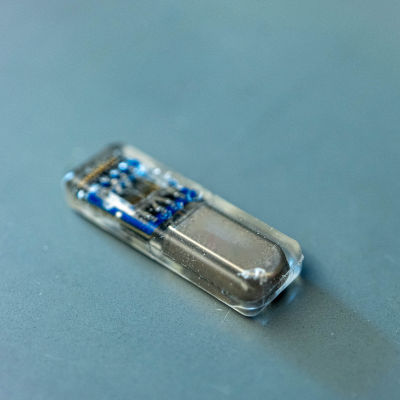

Scientists have developed a small implantable device that could one day act as a living pharmacy inside the body. The device holds engineered cells that produce medicines continuously. In tests with rats, it delivered three different drugs at the same time for up to 30 days.
The device is called HOBIT, which stands for hybrid oxygenation bioelectronics system for implanted therapy. Biologics are medicines made from living sources, such as proteins or antibodies. The cells inside the device were modified to make an anti-HIV antibody, a GLP-1-like peptide, and leptin all at once. GLP-1-like peptide is a type of drug similar to those used for treating type 2 diabetes and controlling blood sugar or appetite. Leptin is a natural hormone that helps control hunger and energy use.
HOBIT solves a key problem with cell implants. When many cells are packed together under the skin, they quickly run out of oxygen and die. The new system includes a tiny oxygen generator that splits water molecules to make oxygen right where the cells need it. This keeps more cells alive in a small space. The whole device is about the size of a folded stick of gum. It protects the cells from the body's immune attack while supplying oxygen and nutrients. It also has electronics and a battery for wireless control.
Oxygen supply breakthrough
In the experiments, devices with oxygen kept steady levels of all three drugs in the rats' blood for the full 30 days. Without extra oxygen, shorter-lasting drugs disappeared after about a week. At the end of the test, about 65 percent of the cells remained alive in oxygenated devices, compared with only 20 percent in ordinary ones. Cell density was roughly six times higher than in standard implants.
The study is published in Device. Researchers from Northwestern University, Rice University, and Carnegie Mellon University worked together on the project. Future steps include testing in larger animals and exploring uses such as helping people with diabetes through implanted pancreatic cells.
This approach may one day let patients avoid daily pills or injections for chronic conditions by providing steady drug production from a single long-lasting implant.