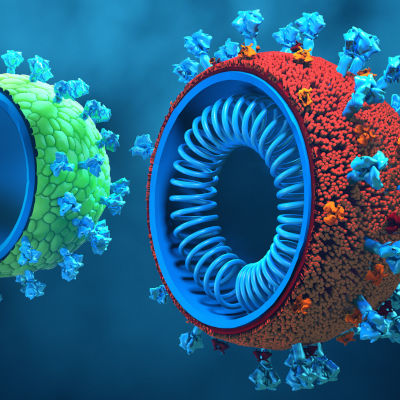

Gene editing is a method that allows scientists to make precise changes to DNA in order to treat genetic diseases. One major challenge is delivering the editing tools safely and efficiently into the right cells. A common approach uses engineered virus-like particles. Scientists load them with gene-editing tools.
Most previous work has focused on redesigning the particles themselves. In a study published in Nature Communications, researchers at the Whitehead Institute took a different approach. They examined the human cells used to manufacture these particles, and created a platform to test which genes in the producer cells help or hinder particle production.
The researchers made a large group of producer cells in which nearly every gene in the human genome was turned off, one gene per cell. Each virus-like particle carried a small genetic tag that identified the switched-off gene from its producing cell. By reading these tags in the finished particles, the scientists could see which gene changes improved output.
Key gene discovery enhances cargo loading
One standout result came from disabling a specific gene that normally limits the production of guide RNAs. Guide RNAs are short RNA molecules that direct gene-editing tools to their exact targets in DNA. When this gene was removed, the producer cells made more guide RNAs. As a result, each particle carried more functional cargo. This improvement worked across several types of gene editors and different particle designs from other laboratories.
The study also identified other genes with mixed effects. Removing some increased the protein parts of the particles but reduced delivery strength in certain cases. In situations where protein cargo is limited, however, the same changes improved results.
The new platform allows further testing of cellular changes beyond single-gene switches. The researchers are sharing the improved cell lines with other scientists and are working on better delivery into immune cells, neurons, and other important cell types. This work addresses a major remaining obstacle in gene editing by improving how the delivery vehicles are made. Better production could bring these particles closer to safe use in patients for treating genetic diseases.