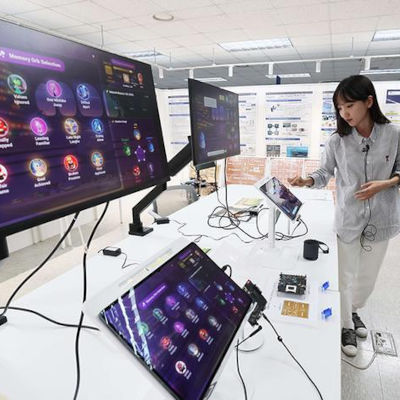

Researchers at KAIST have created an artificial intelligence (AI) chip called SoulMate. This chip makes artificial intelligence truly personal by learning a user’s speech style, preferences, and emotions right away, turning AI from a general helper into something closer to a “digital soulmate.”
Large Language Models (LLMs) answer many questions well but forget small details about a user’s habits or past talks. This often makes AI feel distant. SoulMate solves this by running everything directly on the device, without sending data to distant servers (On-Device AI).
The chip includes two key methods built into its hardware. One is Retrieval-Augmented Generation (RAG), which lets the AI recall and use past conversations to give answers that fit the user better. The other is Low-Rank Adaptation (LoRA), a way to quickly update the AI based on new user feedback without heavy rebuilding. Together, these allow the system to learn and reply in real time.
Ultra-low power and strong privacy features
SoulMate responds in just 0.2 seconds while learning at the same time. It uses a special design called Mixed-Rank architecture, which handles important information differently from less important details to save energy. The chip runs on only 9.8 milliwatts - about 1/500th the power of a typical smartphone processor. This low use means it can work on phones, watches, or other small devices without draining the battery quickly.
A major strength is privacy. All personal data stays inside the device and never goes to external servers. This “Security-Complete AI” setup greatly reduces the risk of leaks.
According to the researchers, SoulMate copies how humans build friendships. The goal is for future AI to act like a close companion that knows the user well and always protects their privacy.
The research was presented at the International Solid-State Circuits Conference. A live demo showed the chip changing its response style instantly based on user reactions. Plans call for commercialization around 2027 through a startup named OnNeuro AI.