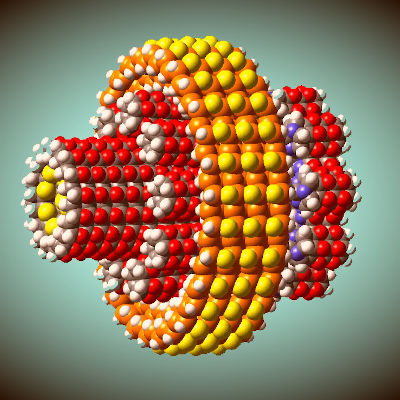

Eric Drexler , the "father of nanotechnology," has announced MSEP, which stands for Molecular Systems Engineering Platform. This is a free, open-source software tool for designing and simulating atomically precise nanomechanical systems. These systems include dense covalent machinery, where atoms are linked by strong chemical bonds, like a nanoscale differential gear that only exists in simulations today because current chemistry cannot create such precise structures.
Drexler explains that developing tools for molecular machines we cannot yet build is important. When artificial intelligence (AI) reaches key levels of ability, it will remove barriers to making these machines. This will change the basics of physical technology. Understanding these changes requires hands-on exploration now.
MSEP works like a game for molecules, with rules based on physics and atomic precision. Users can assemble structures and watch their behavior using molecular dynamics. The platform MSEP.one is built on a modern game engine called Godot. It is extensible with add-ons. Current features include atomistic simulations, which model individual atoms, with plans for quantum chemistry and multi-scale modeling for different size levels.
Drexler notes he has supported the project's development. The software is easy to install and use, with point-and-click building.
Strategic importance of early design
The path from today's protein engineering, which is modifying biological proteins, to self-assembled molecular 3D printers is outlined. These printers would have frameworks, moving parts, and motors for precise positioning at the molecular level. This leads to atomically precise mass fabrication, or APMF, making things in large amounts with atomic accuracy.
AI will speed this up by improving design and deployment of complex systems. Drexler hints at "generative nanotechnologies" that will extend the impact of generative AI to the physical world at the nanoscale. There is a feedback loop: AI training needs much energy, but APMF will create efficient devices that save energy by millions of times. When these meet, progress will speed up greatly.
Drexler invites people to download MSEP from MSEP.one. Users can explore, build skills, and share creations. Designing these can be engaging like puzzles. The new MSEP Foundation will handle development and community.
See also the MSEP.one press release.