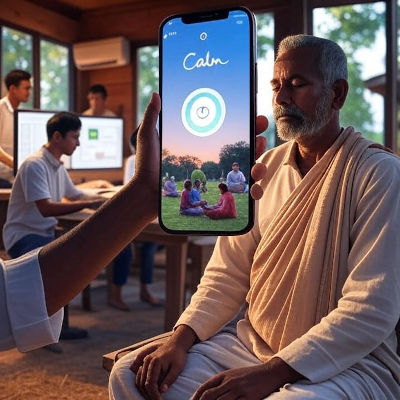

Psychologists at Carnegie Mellon University have written a review paper on meditation apps, published in the American Psychologist.
Many people use meditation apps on their smartphones, computers, or wearable devices. Thousands of such apps exist, and the top 10 have been downloaded over 300 million times. Early studies show that even short sessions can help lower depression, anxiety, stress, and improve sleep problems. Apps like Calm and Headspace are very popular and engage millions daily. They make meditation accessible to everyone, even those in remote areas without group classes. For example, a farmer in a rural place can use an app anytime.
These apps also help scientists study meditation on a large scale. Instead of testing a few hundred people in a lab, researchers can now reach thousands worldwide using apps and devices that track heart rate or sleep. Biometrics can be combined with meditation practices for better results. Meditation apps make up 96 percent of users in the mental health app market, changing how these practices reach the public.
Challenges in user engagement
Apps start with simple sessions, like breathing exercises or mindfulness, which is paying attention to the present moment without judgment. Users might do 10 to 21 minutes three times a week for benefits, unlike longer daily in-person sessions. This flexible approach suits busy people, allowing quick practices anywhere, like in a line at a coffee shop. As apps evolve, artificial intelligence (AI) could create personalized guides, like chat-bots for meditation. This might help tailor sessions for different needs, from improving sports performance to easing pain.
However, keeping users engaged is a big issue. Most people stop using the app after 30 days. The industry needs better ways to maintain interest, similar to language-learning apps. Despite this, demand is high due to widespread stress and loneliness. Apps won't fully replace in-person teachers but serve as a good starting point, with studies showing they reduce symptoms and stress markers in the body.