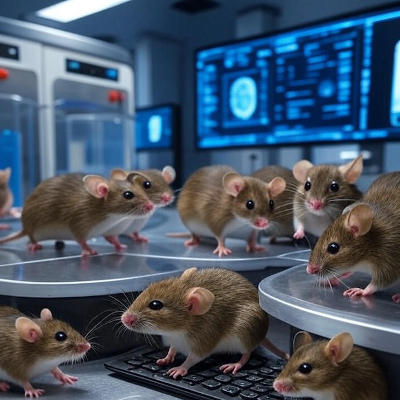

In a world full of conflict, a study from UCLA shows that mice and artificial intelligence (AI) both learn to cooperate in very similar ways. Both use alike behaviors and brain patterns to work toward common goals. This suggests there are basic rules for cooperation that apply to living things and machines.
Cooperation means working with others to achieve something good for everyone. The study matters because it helps explain how people get along in groups, from jobs to global talks. It could also help treat problems with social skills and make better AI that works well with humans. Without cooperation, groups can face fights and instability. As AI gets smarter, seeing these parallels opens doors to understand how teamwork starts in machines and if it matches brain processes in animals.
What the researchers did
Scientists made a task where pairs of mice had to act at the same time in short moments, down to 0.75 seconds, to get rewards like food. They used calcium imaging, a way to watch brain cells in the anterior cingulate cortex (ACC) light up when active. Then, they trained AI agents with multi-agent reinforcement learning on a similar task in a computer world. This let them compare how real brains and AI learn teamwork.
The study found mice learned to coordinate well. They moved near their partner, waited for them, and interacted before deciding. These acts grew a lot with practice. Brain cells in the ACC tracked these behaviors and partner info, and mice with stronger partner signals did better. Blocking the ACC cut cooperation, showing its key role. AI agents used similar strategies, like waiting and timing. Both systems formed groups of cells or nodes that focused on teamwork cues, with partner data becoming more vital over time. Disrupting key parts in AI also hurt performance, like in mice.
The matches between mice and AI hint at core rules for cooperation. This research is published in Science.