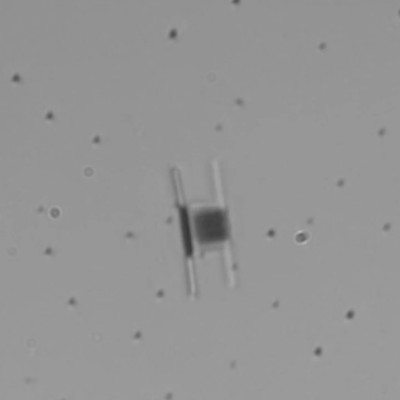

At Cornell University, scientists have built the world's tiniest walking robot. This robot, measuring just 2 to 5 microns, can move around freely. Its goal is to reach and study tiny places, like inside tissue samples, to take pictures and measure tiny forces.
Paul McEuen, who led the project, compared this robot to putting a microscope's lens right into the world of the very small. This robot can perform tasks a regular microscope can't do up close.
In a study published in Science, the researchers explained how they control the robot. It uses magnets to move in a pinching motion, allowing it to "walk" or even swim through liquids. This movement lets the robot reach places where it can do its job of imaging or sensing.
These robots are much smaller than any previous walking robot, which were 40 to 70 microns. Their new tiny robots can do what they're told by controlling the magnetic fields that drive them.
Robots that work at very small scales
The robots carry tiny magnets of different shapes - long and thin, or short and stubby. This allows the robots to move in response to magnetic fields, with short ones needing less force to change direction.
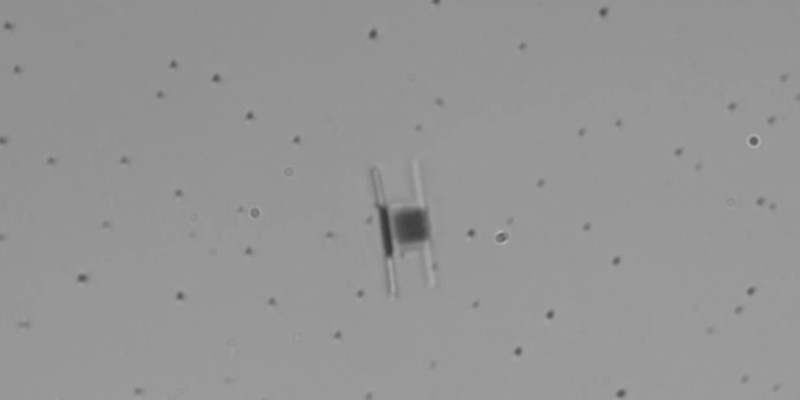
This technology blends robotics with optics at the micro level, allowing the robot to not just move but also to manipulate light for better imaging.
By changing shape, the robot can enhance how it captures images or senses forces by altering how light diffracts around it.
The term "diffraction" refers to how light bends or spreads out when it passes through or around something.
The team sees future uses of these robots in science, like studying DNA, or in medicine, where they could be used for precise tasks inside the body.
These micro robots could one day perform detailed microscopic work by moving over surfaces to inspect, measure, or repair at a scale previously unimaginable.