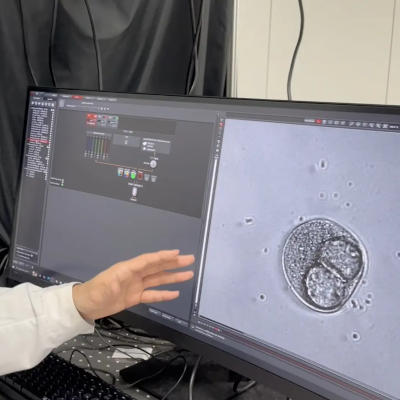

Stem cells are basic body cells that can change into different types, such as bone, cartilage, or muscle. Researchers at the Technical University of Munich have found a new way to guide these cells using nanorobots, each just a fraction of a human hair wide. These robots are made of gold rods and plastic chains and move inside a soft gel cushion that holds a few stem cells.
The robots are powered and directed by laser light. When activated, they press gently on exact spots of the cell wall. This pressure, called mechanical stimulation, opens ion channels - tiny gates in the cell membrane that control what enters or leaves. It also turns on proteins, including one that plays a key role for building bone cells.
Guiding cells with the right force and rhythm
By using the correct low force and timing, the stem cells reliably turn into bone cells in just three days. The full process to make mature bone tissue takes three weeks. The same idea works for cartilage and heart cells, but each type needs its own pattern of pressure, similar to different workout plans for various muscles.
The stem cells used are mesenchymal stem cells, often called repair cells because they help fix damaged tissue. They measure about 10 to 20 micrometers across. Before this method, changing them into specific cell types was hard to control. Now, the nanorobots apply force in a precise, three-dimensional way inside the gel, giving much better results.
The next goal is to automate the system. Doctors will need up to one million specialized cells for real treatments. Making the process automatic will allow faster production of bone, cartilage, or heart cells from human stem cells. This advance could lead to quicker and more effective medical repairs in the future.
The researchers have published the methods and results of this study in Small Science.