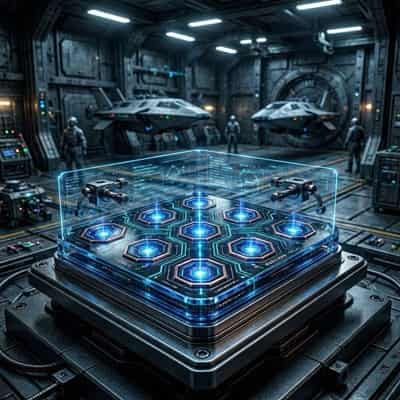

NASA is putting a revolutionary new computer chip through its paces, one designed to give future spacecraft the "brains" to think for themselves in deep space. The processor, developed under the agency's High Performance Spaceflight Computing (HPSC) project, is built to endure the harsh radiation and extreme temperatures of space while delivering a massive leap in computing power. [1]
The new radiation-hardened chip, built by Microchip Technology Inc., is designed to provide up to 100 times the computational capacity of current spaceflight computers. Early tests at NASA's Jet Propulsion Laboratory (JPL) have shown the chip operating at an astonishing 500 times the performance of the radiation-hardened chips currently in use on missions. [2]
Engineers began testing the palm-sized chip in February, marking the milestone by sending an email with the subject line "Hello Universe"—a nod to early computer programming traditions. The testing has involved radiation exposure and simulations of high-stress planetary landings. This next-generation "system-on-a-chip" is the cornerstone of NASA's plan to enable truly autonomous spacecraft, allowing them to use onboard artificial intelligence to analyze data, navigate, and respond to hazards in real time without waiting for commands from Earth.