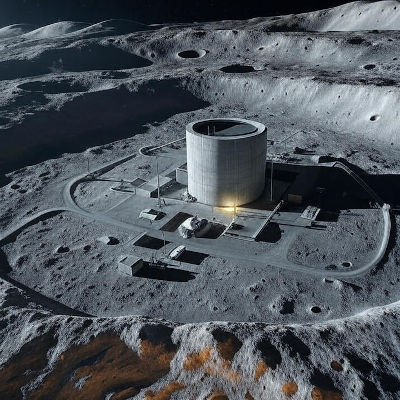

NASA’s acting administrator, Sean Duffy, recently issued a directive to speed up efforts to place a nuclear reactor on the moon, The New York Times reports (unpaywalled copy).
This energy could power a lunar base, supporting equipment and human activities. Duffy, appointed by President Trump as temporary NASA leader, emphasized the urgency of this project to support a lunar economy and to strengthen national security in space. The directive responds to plans by China and Russia to build a lunar base with a nuclear reactor by the mid-2030s. If they succeed first, they might limit U.S. activities on the moon by creating restricted zones.
The directive requires NASA to appoint an official within 30 days to lead the project and to request proposals from companies within 60 days. These companies will design a reactor capable of producing 100 kilowatts of electricity, enough to power about 80 U.S. homes. The goal is to have the reactor ready for launch by late 2029. The moon’s environment poses challenges for power generation. A lunar day lasts four weeks, with two weeks of sunlight followed by two weeks of darkness, making solar panels, which convert sunlight into electricity, and batteries unreliable. The focus is on the moon’s south pole, where some areas are always in shadow, complicating power needs.
Past Efforts and Current Challenges
NASA has explored nuclear reactors before, awarding $5 million contracts in 2022 to companies for designs producing 40 kilowatts and weighing less than six metric tons. The new directive pushes for a larger, more powerful reactor. This effort aligns with a shift in NASA’s focus toward human spaceflight, reducing emphasis on robotic probes, climate research, and aviation technology. However, it’s unclear what the reactor will power, as NASA’s plans for a lunar base remain vague. The Artemis program, NASA’s initiative to return humans to the moon, targets a 2027 landing, but experts doubt this timeline.