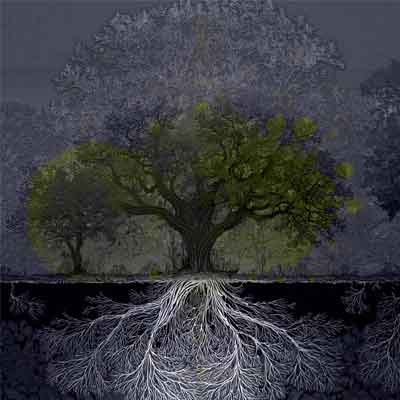

What if the most advanced technology we could design was inspired not by human invention, but by the quiet genius of the natural world?
When Stones Speak
In the high Andes, Inca masons shaped stone walls that have withstood centuries of earthquakes—without mortar, without symmetry, but with a kind of order that confounds modern engineers. Their secret? A Geometry that echoes the arrangement of corn kernels: pentagons pressed into hexagons and heptagons, each stone nestled as if grown into place.
Western eyes often call these walls “irregular.” But to those who listen, they tell a story of fractal intelligence, a story written in the language of nature.
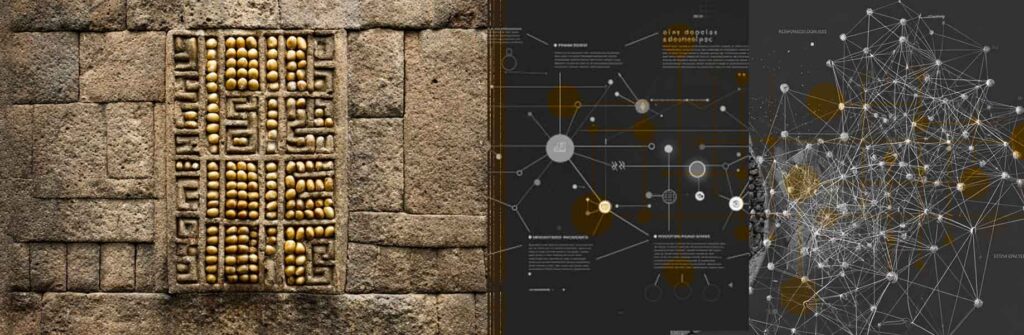
Nature’s Algorithms: Why Irregularity Wins
Nature doesn’t care for straight lines or perfect grids. From the spirals of sunflower seeds to the tangled wisdom of mycelium networks, the natural world optimizes for efficiency, resilience, and adaptation. Irregular, interlocking forms (pentagons, hexagons, and beyond) appear wherever strength and flexibility matter most.
These organic geometries are not “chaos.” They are the result of nature’s deep logic, each element adjusting, negotiating, and aligning with its neighbors for the good of the whole.
This same pattern surfaces in:
- Corn kernels (as the Incas observed)
- Cellular tissues
- Mycorrhizal fungi (the “Wood Wide Web” beneath the forest floor)
- River deltas and neural networks
In each, information and resources flow not along rigid pathways, but through dynamic, adaptive networks.
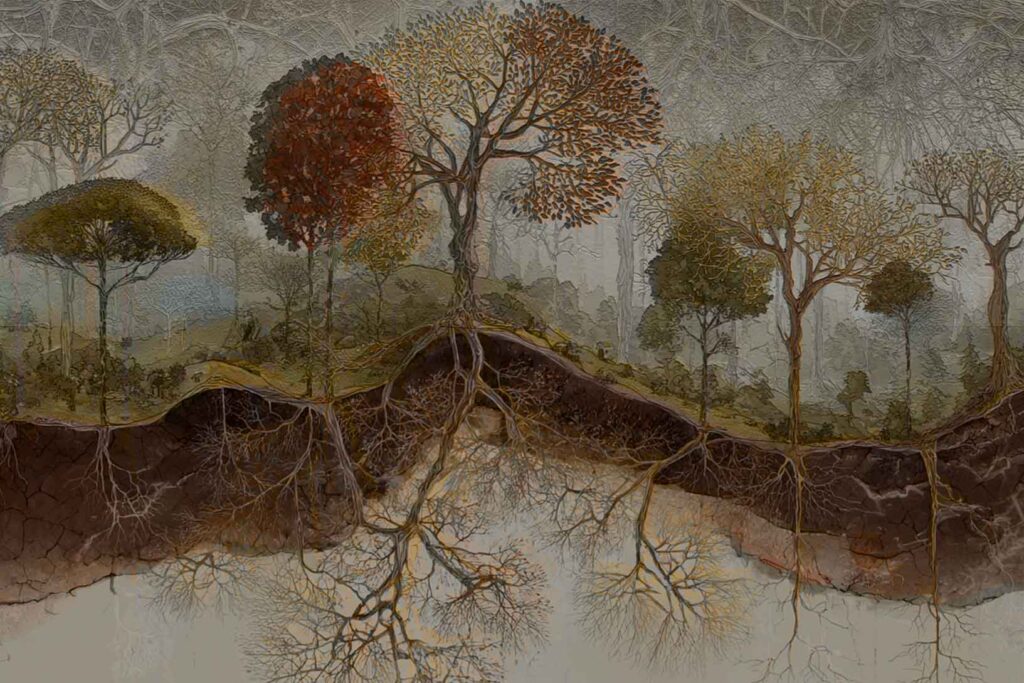
From Ancient Stones to Digital Streams
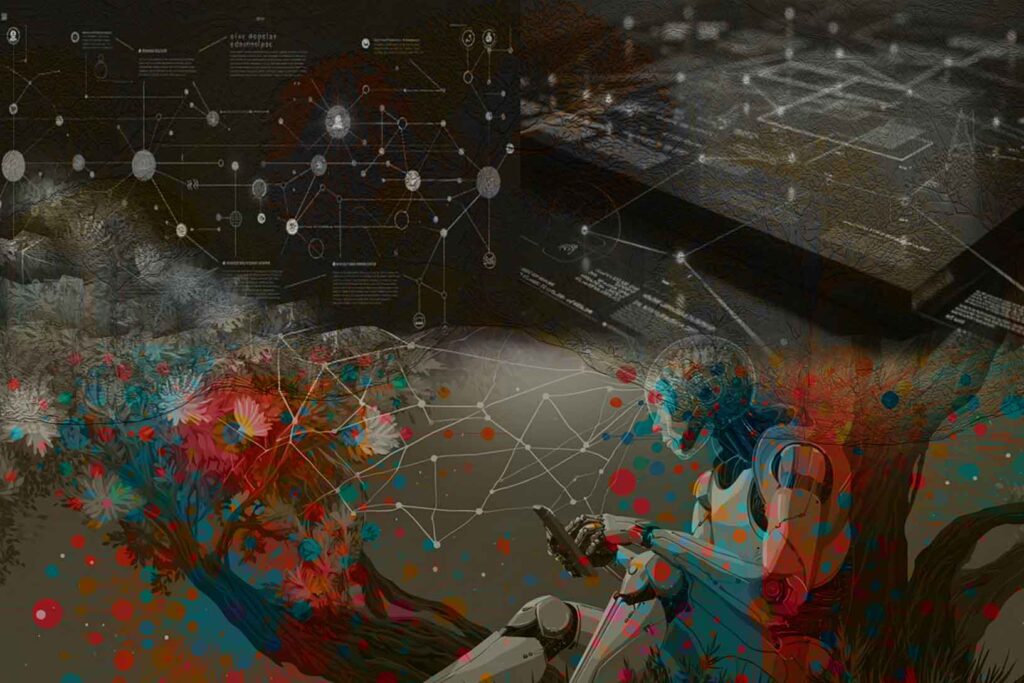
Most of our current digital infrastructure—from data storage, network routing, to AI learning—is built on uniformity and fixed partitioning. But these systems can be brittle, vulnerable to “earthquakes” of overload, attack, or rapid change.
What if we reimagined software, data, and networks based on the Inca wall or the mycelial web?
Imagine:
- Data blocks that self-organize like corn kernels, optimizing for space, importance, and resilience.
- Packets that route dynamically across fractal, self-healing mesh networks, adapting in real time, like fungal threads seeking new nutrients.
- Storage and codebases that absorb shocks (bugs, surges, attacks) by flexibly redistributing load, not collapsing under failure.
Vibrational Intelligence: The IONATION Framework
This is where vibrational intelligence comes in. At the core of the IONATION framework is the idea that systems—whether human, natural, or artificial—thrive when they resonate across multiple dimensions:
- Individual Interior (origin, intent)
- Individual Exterior (action, output)
- Collective Interior (culture, trust, “consensus protocols”)
- Collective Exterior (structure, topology, visible flows)
Just as each stone in the Inca wall “listens” to the shape and force of its neighbors, each node or data packet in an optimized system tunes itself to the needs and signals of the larger whole. The result? Emergence, not imposition. Order, not through top-down control, but through relational resonance and dynamic adaptation.
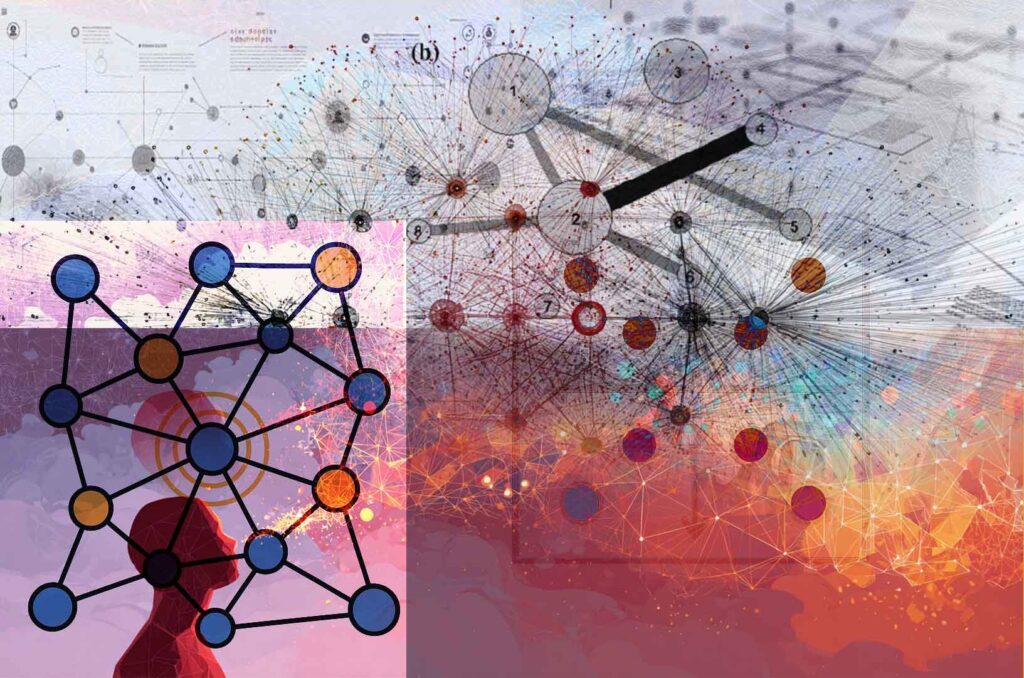
Design Principles for Living Tech
How do we bring these lessons into tomorrow’s AI and networked systems?
- Fractal Partitioning:
Use natural geometric algorithms (Voronoi diagrams, logarithmic spirals) to organize memory, storage, and computational resources.
- Resonant Routing:
Route information not only for speed, but for “fit,” allowing data to find its natural place in the web based on real-time context and demand.
- Self-Healing Structures:
Enable systems to detect and adapt to disruptions, just as fungal networks reroute around damage or stone walls flex with the earth.
- Bottom-Up Emergence:
Design protocols and architectures that allow intelligence to emerge from the interaction of many simple parts, echoing both ancient engineering and the deep web of life.
Conclusion: Building the Future with Ancient Eyes
Our greatest technologies may yet come from listening more closely to what the ancient world, and the living earth, already know. By tuning our systems to the “code” of nature, we can create AI and networks that are not only powerful, but alive with the flexibility, resilience, and wisdom of a million years of evolution.
To build the future, let’s remember the oldest language of all: the geometry of life.
Want to see how vibrational intelligence and nature’s algorithms can transform AI? Let’s connect the stones.
What is IONATION?
IONATION is a framework for understanding and designing systems—human or artificial—through the lens of Vibrational Intelligence. It maps any situation across four dimensions:
- Individual Interior: The subjective, invisible aspects of intent, belief, emotion.
- Individual Exterior: Observable actions, outputs, behaviors.
- Collective Interior: Shared values, culture, group resonance.
- Collective Exterior: Visible systems, structures, and protocols.
Unlike top-down, rigid models, IONATION® emphasizes emergence, resonance, and adaptation, mirroring the self-organizing intelligence found in nature’s geometry. In tech, this means designing data, networks, and AI systems that aren’t just efficient, but are also alive to context, flexible under stress, and capable of evolving harmoniously with their environment.
Curious to see IONATION in action? Explore the GitHub repository and download the whitepaper and codebase.