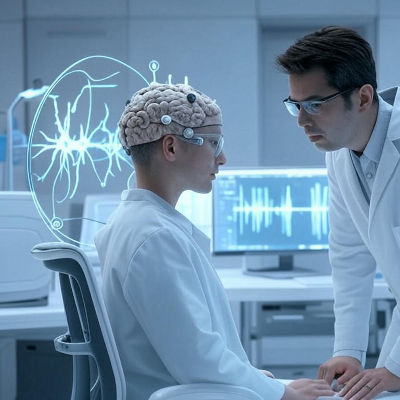

Elon Musk’s Neuralink recently filed trademark applications for “Telepathy” and “Telekinesis” with the United States Patent and Trademark Office, Forbes reports. These filings happened on March 3, 2025.
They show Neuralink’s bold plans to go beyond its current brain-computer interface technology.
The Telepathy trademark covers software and hardware for assistive technology. Assistive technology helps people with disabilities use devices. The filing mentions an implantable brain-to-computer interface. This device could let people control computers with their thoughts. Elon Musk once said Telepathy would help paralyzed people use computers. Now, the application hints at bigger goals. It suggests humans with implants might communicate telepathically.
Neuralink wants to make ideas from science fiction real
Telepathy means sharing thoughts without speaking. Telekinesis, controlling objects with the mind, also appears in Neuralink's plans. For telepathy, two people with implants could share thoughts directly. For telekinesis, thoughts could control devices without physical action.
Josh Gerben, a trademark attorney, says this raises big concerns. Privacy, ethics, and security could become problems with thought-based communication. Neuralink filed these trademarks on an “intent-to-use” basis. This means they must plan to build and sell these ideas soon. Musk talked about this vision on the Lex Fridman Podcast in August 2024. He said Neuralink could create new ways for humans to connect. Both people would need implants for it to work.
Neuralink’s current tech uses a brain implant called the “Link.” This implant picks up neural signals. Software then turns these signals into actions, like moving a cursor on a screen. Human trials started in January 2024. Noland Arbaugh was the first person to get the implant during brain surgery. So far, three people have the experimental implant. These tests are part of an early study to check if it works.
The filings for Telepathy and Telekinesis show Neuralink’s dreams go further. They want to move past helping with medical needs. The company aims to change how humans talk and interact. This technology could reshape communication and control in the future. Neuralink’s steps build toward that sci-fi vision.