
Researchers led by the University of Liverpool have found a method to reproduce some of graphene's most important features in a three-dimensional material. This could solve problems in using these features for widespread green computing. Graphene has uses in electronics, aircraft, and medicine. However, its flat, two-dimensional shape makes it weak and hard to use in tough settings or big projects.
The researchers studied a three-dimensional material called HfSn₂. This material exhibits the quick movement of electrons seen in graphene's two-dimensional form. This could lead to stronger materials that still have advanced, low-energy electronic actions. Such materials are useful for future computers that use less power, including logic devices and spintronic devices.
The researchers have described the methods and results of this study in a paper published in Matter.
How the discovery was made
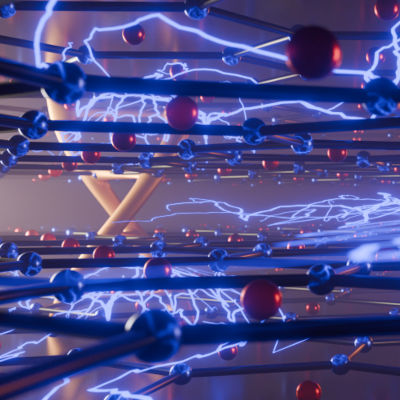
The researchers combined computer models with lab tests on high-quality crystals grown in the lab. HfSn₂ has layers shaped like honeycombs stacked in a twisting pattern, similar to the spiral in DNA. This setup keeps the special electronic behavior usually found only in flat materials.
The material also has Weyl points, which are rare spots in its electronic setup that make it easier for electrons to flow. As a result, electrons in HfSn₂ move as if in a two-dimensional world, even though the material is fully three-dimensional and sturdy.
The main result is that electronic actions can be independent from the material's physical build. This shows that graphene-like performance is possible in robust materials, not just fragile layers. By controlling chemical bonds and stacking, researchers can adjust electronic behavior.
The researchers noted that two-dimensional-like electron movement can happen in a full three-dimensional material, which doesn't need to be flat to act like graphene, and that chemistry can create surprising properties by arranging atoms.
This research is part of a large project to find new materials using computers, artificial intelligence, and machine learning.