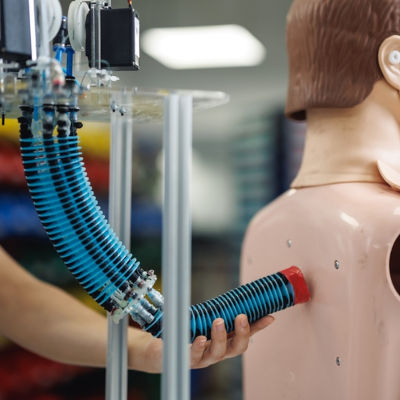

Singapore-MIT Alliance for Research and Technology scientists have created a new artificial intelligence (AI) system that helps soft robots learn many movements and tasks at once, then change them quickly for new situations without needing more training or losing their abilities. Soft robots are made from bendable materials like rubber, unlike hard robots with stiff parts. They use actuators, which are parts that work like fake muscles to make them move. This flexibility is good for gentle or changing jobs, but controlling them is hard because their shapes shift in ways that are hard to predict. Real places often have surprises like wind or extra weight, which can mess up their actions.
Before this, most ways to control soft robots could only do one or two of the needed skills: using old learning for new jobs, changing fast when things go wrong, or staying safe and steady while adapting. This has stopped soft robots from being used widely in real life.
How the system works
The new system copies how the human brain learns and adapts. It uses two kinds of "synapses," which are links that change how the robot moves. The first kind, called structural synapses, learns basic moves like bending or stretching offline, before the robot starts working. These give a strong base. The second kind, plastic synapses, update as the robot goes, tweaking actions for what's happening right now. A safety check keeps everything smooth and controlled.
Tests on two types of soft arms showed big improvements. Errors in following paths dropped by 44 to 55 percent even with heavy shakes. Shape control was over 92 percent accurate despite changes like added weight or broken parts. It worked well even if half the actuators failed.
This opens ways for stronger soft robots in making things, moving goods, checks, and health care. In medicine, devices could fit to a person's changes, making them safer. Future work will try faster speeds and harder places, like self-moving systems.
This research is published in Science Advances.